
If you think making rice is difficult or takes too much time, I have a secret to share with you. For a long time, I used to stand by the stove, worrying about the rice burning or turning into a sticky mess. But one busy weeknight, I decided to try making microwave white rice. To my surprise, it came out perfectly fluffy!
Since then, this easy microwave rice recipe has become a lifesaver in my kitchen. Whether you are meal-prepping for the week or just need a quick side dish, learning how to steam rice in the microwave will save you time and effort.
In this guide, I will show you exactly how to get perfect results every single time without using a stovetop. Let’s get started!
Why Cook Rice in the Microwave?
You might be wondering why you should use a microwave instead of a regular pot. Here are a few simple reasons:
- No baby-sitting needed: You do not have to watch a pot to see if the water is boiling over.
- Saves space: If you are cooking a big dinner, it frees up space on your stove.
- Easy clean-up: You cook and serve in the same bowl. Less dishes to wash!
The Golden Rule: Microwave Rice Water Ratio
The ultimate secret to getting fluffy rice in the microwave is measuring the exact amount of water you use. Guessing the water amount is the number one reason rice fails. Different types of rice need slightly different amounts of liquid to cook properly.
Here is a handy table showing the perfect microwave rice water ratio:
| Rice Variety | Amount of Dry Rice | Amount of Water Required |
| Long-Grain White Rice | 1 Cup | 1.5 Cups |
| Basmati Rice | 1 Cup | 1.5 Cups |
| Jasmine Rice | 1 Cup | 1.25 Cups |
| Brown Rice | 1 Cup | 2.5 Cups (Cook time varies) |
Nutritionist Tip: If you prefer your rice to be a little softer for digestion, you can increase the water by 1/4 cup. However, the ratios above generally provide the perfect, non-mushy texture.
Step-by-Step Instructions
Follow these highly detailed, simple steps for the perfect bowl of rice.
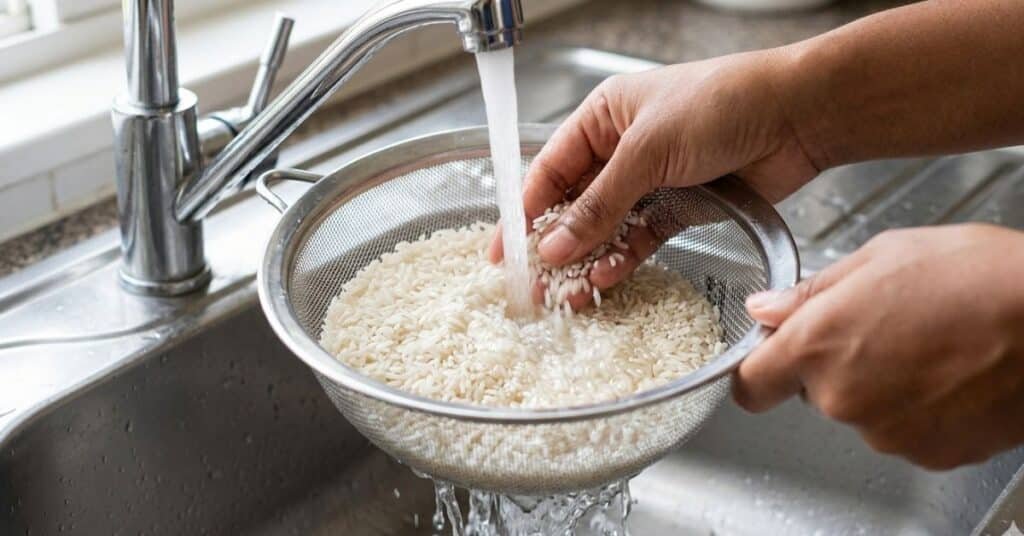
Step 1: Rinse the Rice Thoroughly (Do Not Skip!)
Put your dry rice in a fine-mesh strainer and wash it directly under cold running water. Use your fingers to move the rice around. Keep washing for about 1 to 2 minutes until the water coming out of the bottom runs completely clear. This removes the surface starch that makes cooked rice gummy and sticky.
Step 2: Combine the Ingredients
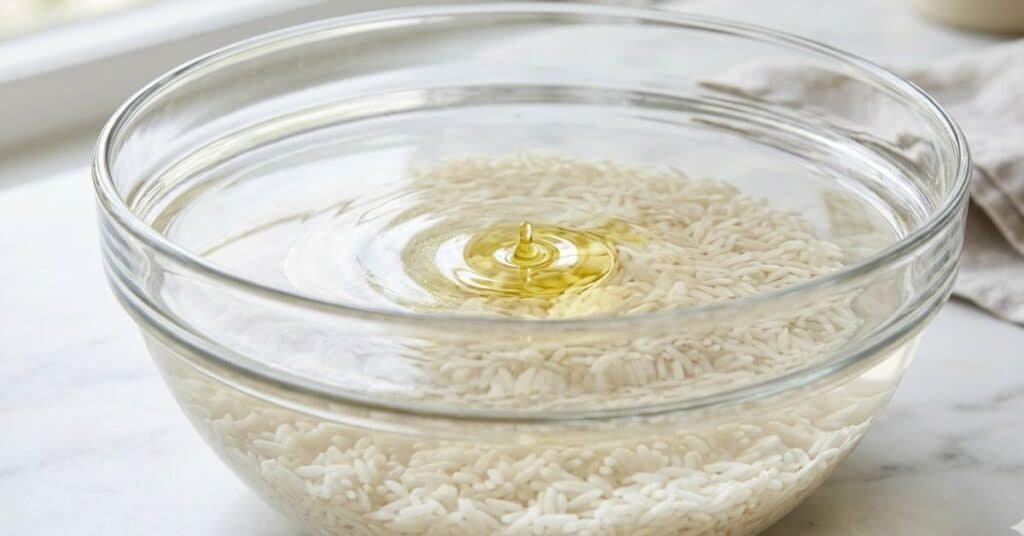
Transfer the freshly washed rice into your large, deep microwave-safe bowl. Add the exact measured amount of water (refer to the ratio table above). Add a pinch of salt for flavor. I also highly recommend adding 1 teaspoon of olive oil, coconut oil, or a tiny bit of butter. The fat coats the grains and completely stops them from sticking together. Stir it very gently just to mix.
Step 3: Microwave Uncovered (The Boiling Phase)
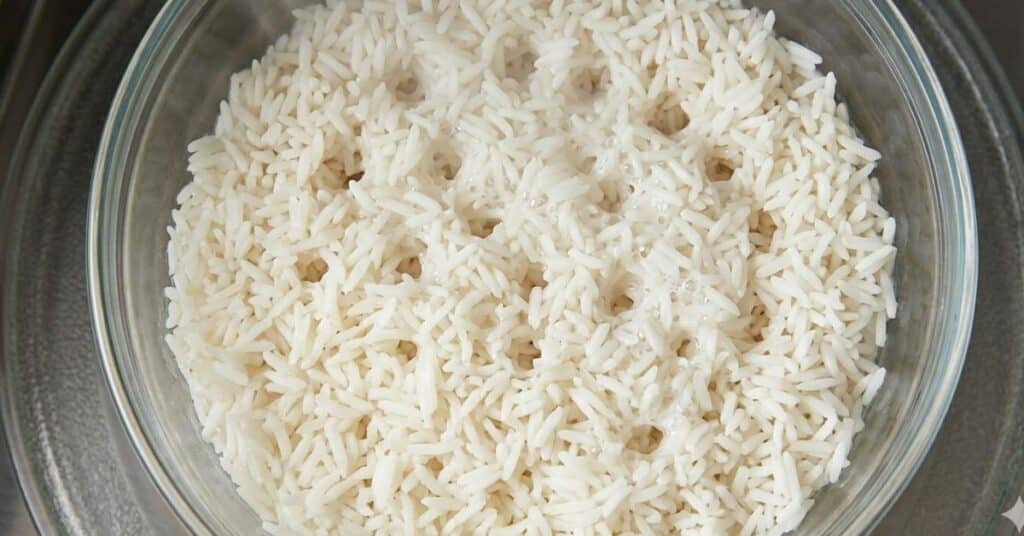
Place the heavy bowl into the microwave. Do not put the lid on yet! Cook the rice uncovered on HIGH power for exactly 10 minutes. During this time, the water will boil rapidly. After 10 minutes, most of the liquid should be absorbed by the grains, and you will see small “steam holes” on the surface of the rice.
Step 4: Cover and Microwave (The Steaming Phase)
Now, carefully take the bowl out or just reach in and cover the bowl with your microwave-safe plate or vented lid. Set your microwave to MEDIUM power (or exactly 50% power level). Microwave for another 4 to 5 minutes. This gentle, lower heat steams the inside of the grains perfectly without burning the bottom.
Step 5: Let It Rest (The Secret to Perfection)
This is the most important step that people often ignore! When the microwave timer stops, do not open the door. Leave the covered bowl inside the microwave for a full 5 minutes. The trapped residual steam will finish cooking the core of the rice gently and allow the moisture to distribute evenly across all grains.
Step 6: Fluff and Serve
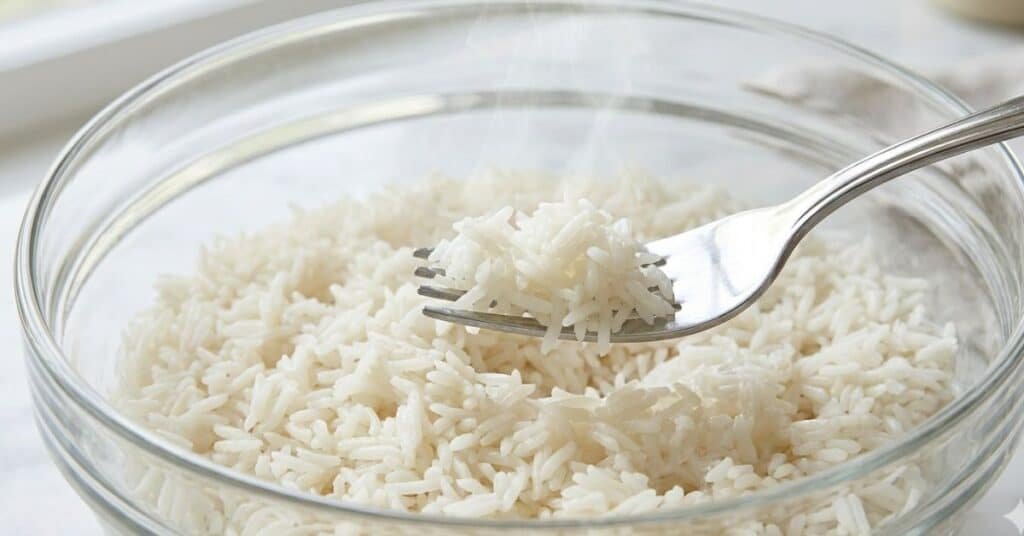
Carefully remove the bowl using oven mitts (it will be extremely hot). Take off the lid, avoiding the hot steam. Take a fork and gently fluff the rice from the outside edges pulling toward the center. You are now ready to serve the most perfect, beautiful rice!
Essential Equipment You Will Need
Before we start cooking, make sure you have the right tools ready. You do not need anything expensive, just a few basic kitchen items:
- A Large Microwave-Safe Bowl: This is crucial. The bowl must be deep (preferably glass or ceramic) and large enough to hold at least 4 times the volume of your rice and water combined. Water expands and bubbles up when microwaved; a small bowl will cause a massive spill.
- A Vented Lid or Ceramic Plate: You need something to cover the bowl during the second cooking phase to trap the steam.
- A Fine-Mesh Strainer: Essential for washing the raw rice properly.
- Measuring Cups: Standard dry and liquid measuring cups for accuracy.
- A Fork: Never use a spoon to mix cooked rice, as it crushes the grains. Always use a fork!
Flavor Hacks: Making Your Rice Healthier and Tastier
Eating plain white rice can sometimes get boring. As a nutritionist, I love finding ways to add flavor and nutritional value to simple dishes. Try these quick additions before you start microwaving:
- Use Bone Broth: Swap the water for chicken or vegetable broth. It adds an amazing depth of flavor and extra protein.
- Add Spices: Toss in a whole star anise, two cardamom pods, or a small cinnamon stick to the water for an amazing, restaurant-style aroma.
- Herb Infusion: After the rice is cooked and fluffed, gently stir in freshly chopped cilantro (coriander) and a squeeze of fresh lime juice for a zesty, fresh side dish.
Troubleshooting Common Microwave Rice Problems
Even with instructions, sometimes things go wrong. Here is how to fix common issues:
- Problem: The water boiled over and made a huge mess.
- Solution: Your bowl was too small or shallow. Next time, use a much taller and wider glass bowl.
- Problem: The rice is still hard and crunchy in the middle.
- Solution: You either did not use enough water, or you skipped the 5-minute resting time. Put it back in the microwave with 2 tablespoons of water, cover it, and microwave on low for 2 minutes.
- Problem: The rice is extremely mushy and wet.
- Solution: Too much water was used, or the rice was not rinsed properly before cooking. Next time, ensure you measure the water exactly and wash the rice until the water runs clear.
Nutrition Information
Being mindful of what we eat is crucial. Rice provides excellent, fast-digesting carbohydrates that give your brain and muscles instant energy. When paired with a good protein source and vegetables, it forms a perfectly balanced meal.
| Nutrient | Amount (Per 1 Cup Cooked Standard White Rice) |
| Calories | 205 kcal |
| Carbohydrates | 45g |
| Protein | 4.2g |
| Fat | 0.4g |
| Dietary Fiber | 0.6g |
Note: Nutritional values can vary slightly depending on the exact brand and type of rice used.
Final Thoughts
Mastering how to make rice in the microwave is an incredible kitchen trick that absolutely anyone can achieve. It is highly efficient, consistently fast, and delivers exceptional results for your healthy daily meals. Try this straightforward method the next time you need a hassle-free side dish, and let me know how it turns out in the comments below!
(FAQs)
Q1: Can I cook brown rice using this exact method?
No, brown rice requires significantly more water and much more cooking time because it still has its tough outer bran layer. To cook brown rice, you will need 2.5 cups of water for 1 cup of rice, and it will take about 25-30 minutes on medium power.
Q2: Do I need to soak the white rice before microwaving?
For standard white, Jasmine, or Basmati rice, soaking is completely optional. While soaking for 15 minutes can make the grains slightly longer, the microwave method works beautifully even if you just rinse and cook immediately.
Q3: How long does cooked rice last in the fridge?
Cooked rice should be cooled quickly and placed in an airtight container in the refrigerator within two hours of cooking. It will stay safe and fresh for up to 3 to 4 days.
Q4: Is it safe to reheat microwave rice the next day?
Yes, but you must ensure it is heated thoroughly until it is steaming hot all the way through. Adding a tiny splash of water over the cold rice before reheating will bring back its fluffy texture and prevent it from drying out.