Editor’s Note This article has been fully updated and reviewed for nutritional accuracy in June 2026 to ensure it meets the highest standards of evidence-based health guidance. All recommendations are based on verified nutrient profiles and scientific portion control strategies designed for safe, sustainable weight loss.
Many people think sushi is the perfect “diet food.” It looks fresh and healthy, but is it really good for losing weight? The answer is: It depends on what you pick.
Some sushi can help you lose weight, while other types are full of hidden calories. In this guide, we will look at sushi nutrition facts and help you find the best sushi for weight loss.
Nutritionist’s Note
While sushi can be an amazing tool for weight loss, it is highly personalized. Your daily movement, metabolic health, and body composition all dictate how many carbohydrates and calories you should consume in a day. Always focus on whole ingredients, listen to your body’s hunger cues, and consult your doctor before starting any diet plan.
1. What is in Your Sushi? (The Basics)
To understand if sushi is healthy, we need to look at the ingredients:
- Fish: This is the best part. Fish like Salmon and Tuna are high protein sushi options. They help you feel full and are good for your heart.
- Seaweed (Nori): The green wrap is very low in calories and has vitamins that help your metabolism.
- Rice: This is where the calories are. Sushi rice is mixed with sugar and vinegar. Eating too much rice can slow down your weight loss.
- Vegetables: Many rolls have cucumber, avocado, and radish, which are great for health.
2. Best Sushi Choices for Your Diet
If you want to lose weight, you should choose simple items. Here are the top picks:
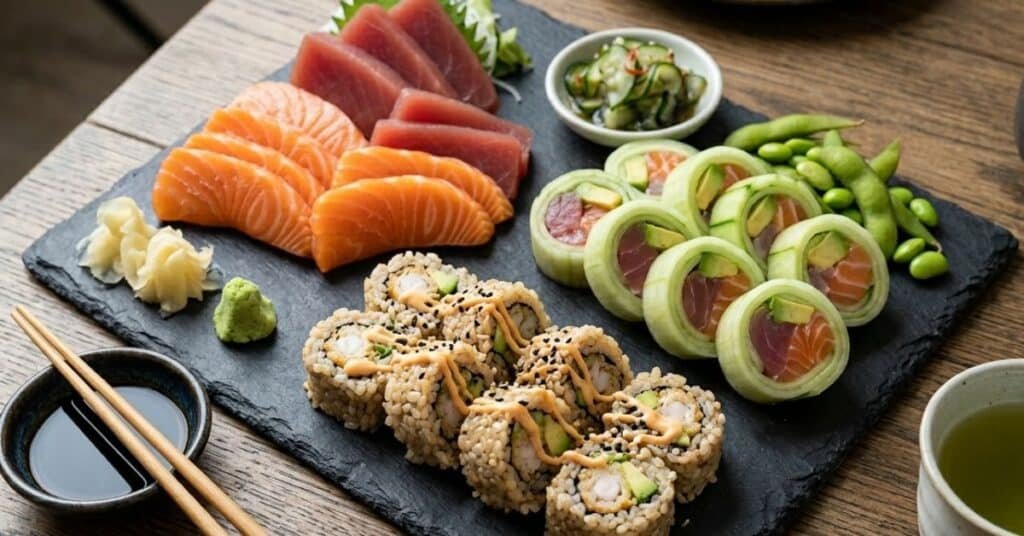
Sashimi (The Best Choice)
If you ask, “Is sashimi good for dieting?” the answer is a big YES. Sashimi is just slices of fresh fish without any rice. It is pure protein and has very few calories.
Naruto Rolls
These are special rolls where the chef uses thin cucumber slices instead of rice. These are the ultimate low calorie sushi rolls.
Brown Rice Sushi
If you must have rice, ask for brown rice. It has more fiber, which keeps you full for a longer time.
3. Comparison Table: Calories in Sushi
This table shows which sushi is good for a diet and which one you should avoid.
| Type of Sushi | Calories (6 pieces) | Diet Friendly? | Why? |
| Salmon Sashimi | 120 – 150 | Yes | No rice, just protein. |
| Cucumber Roll | 100 – 130 | Yes | Very light and healthy. |
| Tuna Nigiri | 200 – 240 | Okay | Some rice, but good protein. |
| California Roll | 250 – 300 | Be Careful | Has mayo and sugar. |
| Spicy Tuna Roll | 300 – 400 | No | High fat due to spicy sauce. |
| Tempura Roll | 500+ | No | Deep-fried and oily. |
How to Enjoy Your Sushi Meal: Step-by-Step
If you want to go out for a sushi dinner without hurting your progress, follow these simple steps to stay on track:
- Step 1: Drink a large glass of water about 15 minutes before you leave for the restaurant to reduce sudden hunger.
- Step 2: Order a protein-packed starter first, like a bowl of steaming warm Miso soup or a small plate of lightly salted edamame.
- Step 3: Choose one simple roll with fresh fish (like a tuna roll) and skip any roll that has words like “spicy,” “crunchy,” or “tempura” in the name.
- Step 4: Use the “dip and tap” method with your soy sauce lightly dip only the fish side into low-sodium soy sauce, tap off the excess, and then eat it.
4. Watch Out for These “Hidden” Calories
Sometimes, healthy sushi becomes unhealthy because of these extras:
- Tempura: This means the food is fried. Fried food is high in fat and calories.
- Creamy Sauces: “Spicy Mayo” or “Eel Sauce” are full of sugar and fat. Try to avoid them.
- Cream Cheese: Some rolls have cheese inside, which adds unnecessary calories.
- Crunchy Toppings: Those little fried bits on top of rolls add a lot of extra calories.
My Personal Tip for Making Sushi Fit Your Plan

When I look at sushi menus, I always use a simple trick to keep things high-protein and low-carb. I order one traditional roll that I absolutely love (even if it has a little white rice), but then I pair it with a plate of fresh salmon sashimi and a big bowl of steamed edamame. This way, I get to enjoy the authentic taste of sushi without overloading my plate with hidden sugars and refined carbs. It keeps me completely full for hours!
5. Simple Tips to Eat Sushi and Lose Weight
- Start with Soup: Drink a bowl of Miso soup first. It fills your stomach so you eat fewer rolls.
- Use Less Soy Sauce: Soy sauce has a lot of salt. Salt makes your body hold water and makes you feel bloated.
- Eat the Ginger: The pink ginger on the side is great for digestion.
- Choose “Raw” over “Fried”: Always pick fresh fish over fried fish (tempura).
- Watch the Portion: 6 to 8 pieces of sushi is usually enough for one meal.
6. Conclusion
Is sushi healthy for weight loss? Yes, it can be! If you stick to sashimi, vegetable-heavy rolls, and avoid fried toppings and heavy sauces, sushi is a great meal for weight loss.
The secret is to keep it simple. The more “natural” the sushi looks, the better it is for your waistline.
(FAQs)
1. How many sushi pieces should I eat for weight loss?
For a balanced weight loss meal, aim for 6 to 8 pieces of sushi. To feel more full without adding many calories, pair your sushi with a side of Miso soup or a green salad.
2. Which sushi roll has the lowest calories?
The Cucumber Roll (Kappa Maki) and the Vegetable Roll are usually the lowest in calories, ranging from 100 to 150 calories per roll. However, Sashimi is the best choice overall because it has no rice and is almost zero carbs.
3. Is the rice in sushi bad for dieting?
Sushi rice isn’t “bad,” but it is a refined carb and contains added sugar and vinegar. If you eat too much, it can increase your calorie intake quickly. Choosing brown rice or asking for “easy rice” (less rice) can help.
4. Can I eat soy sauce while trying to lose weight?
Yes, but be careful. Soy sauce is very high in sodium (salt), which can cause water retention and bloating. Always try to use “Low-Sodium” soy sauce (usually the bottle with the green cap) and use it sparingly.
5. Is spicy tuna healthy for weight loss?
While tuna is healthy, “Spicy Tuna” is usually mixed with mayonnaise, which is high in fat and calories. If you want to lose weight, it is better to order regular tuna and add a little wasabi for heat instead of the spicy mayo.
Is it okay to eat sushi at night when trying to lose weight?
Yes, you can absolutely eat sushi for dinner! However, because traditional sushi contains white rice, eating a large amount of carbs right before bed might cause your body to hold onto a little extra water weight the next morning.
To prevent this, stick to a lighter choice for your evening meal. Focus heavily on fresh sashimi, a clean seaweed salad, or a cucumber-wrapped roll instead of a heavy, rice-filled roll. This gives your body plenty of lean protein to repair your muscles while you sleep without a heavy carb load.
About the Author: Kiran Kiran is a professional nutritionist and wellness expert passionate about making healthy eating simple and accessible. Through her work on health platforms, she specializes in creating practical, nutrient-dense meal plans and high-protein recipes that help individuals reach their fat loss goals without giving up the foods they love.