Hello,
healthy eaters! When you walk into the grocery store, the cooking oil aisle can feel overwhelming. There are rows and rows of bottles. Some are green, some are yellow, and some have very confusing labels. Which one should you buy?
As a nutritionist, one of the most common questions I get asked here at PrepSlim is: “What is the healthiest oil to cook with?” It is a great question. The oil you use every day plays a huge role in your heart health, your weight loss journey, and the taste of your food. But here is the secret: not all oils are created equal, and using a good oil the wrong way can actually turn it bad.
Today, we are going to look closely at cooking oils. We will talk about which ones are best for frying, which ones are best for salads, and which ones you should leave on the store shelf.
What is a “Cooking Oil Smoke Point”?
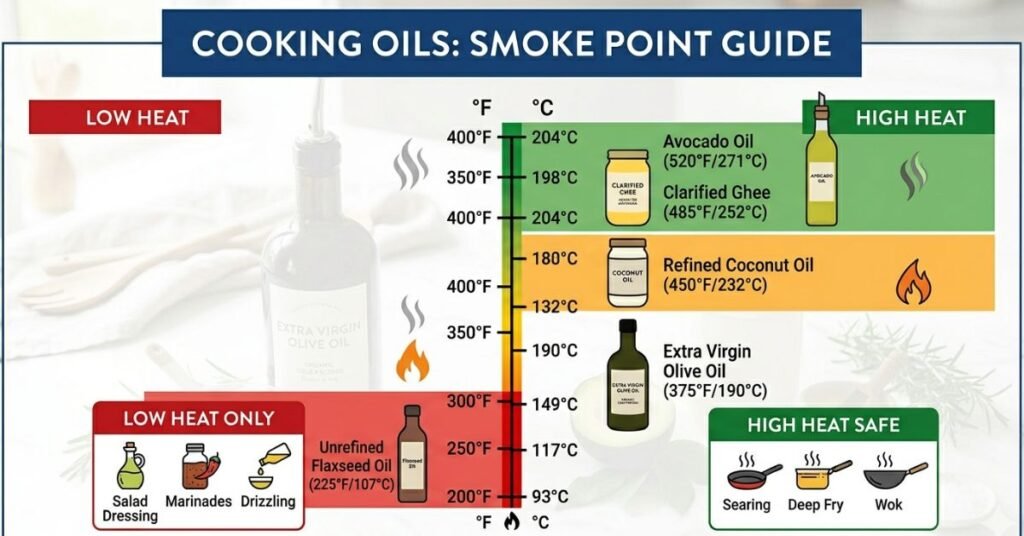
Before we pick an oil, we need to learn a very important rule. Every oil has a limit to how hot it can get. This limit is called the cooking oil smoke point.
Imagine you put a pan on the stove, add some oil, and turn the heat up high. After a few minutes, the oil starts to smoke, and your kitchen smells a bit burnt. That means the oil has reached its smoke point.
Why is this bad?
- Loss of Nutrients: The good vitamins in the oil get destroyed by the high heat.
- Bad Taste: Your food will taste burnt and bitter.
- Health Risks: When oil burns, it breaks down and creates harmful things called “free radicals.” These tiny particles can damage your cells over time.
To keep your meals safe and healthy, you must match your cooking method with the right oil.
The Top 5 Healthiest Oils for Your Kitchen
Let’s explore the best oils you can use. These oils are packed with good fats that help your body function well.
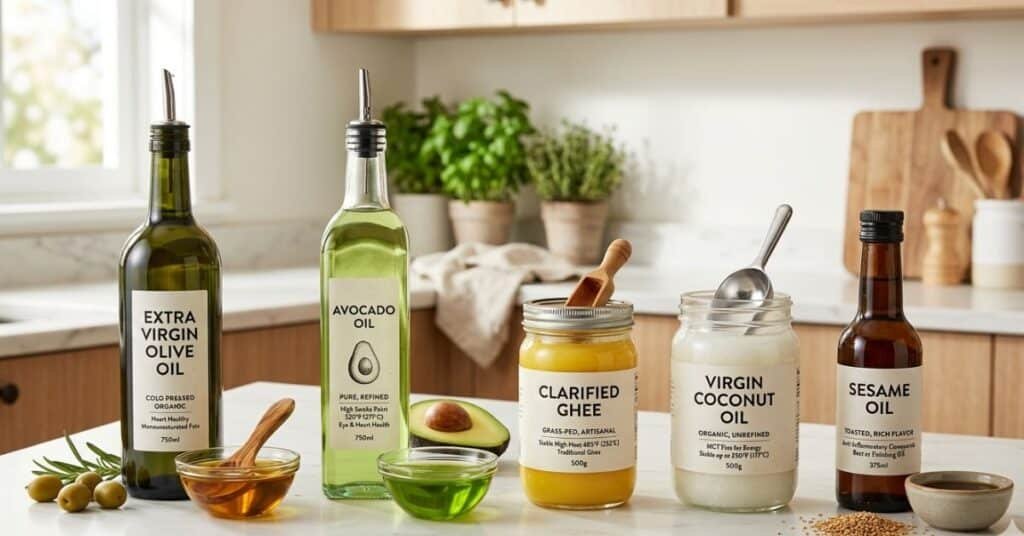
1. Extra Virgin Olive Oil
Extra Virgin Olive Oil (often called EVOO) is famous around the world, especially in the healthy Mediterranean diet. It is an excellent anti-inflammatory oil because it is full of antioxidants.
- How it helps you: It is loaded with heart-healthy fats that help lower bad cholesterol.
- When to use it: It is perfect for low-heat cooking, like lightly cooking vegetables (sautéing). It is also amazing cold, drizzled over a fresh salad or mixed into a dressing.
- What to watch out for: Do not use it for deep frying. High heat will ruin its benefits.
2. Avocado Oil
If you love to turn up the heat, avocado oil is your best choice. It is made from the green, fleshy part of the avocado. It is one of the best high heat cooking oils you can find.
- How it helps you: Like olive oil, it is full of good fats that support your heart. It also contains lutein, an antioxidant that is very good for your eyes.
- When to use it: Use this for frying eggs, roasting potatoes in the oven, or grilling chicken. It has a very high smoke point.
- What to watch out for: It has a very mild flavor, so it won’t make your food taste like avocados, but it can be a little expensive.
3. Ghee (Clarified Butter)
Ghee has been used in cooking for hundreds of years. It is regular butter that has been gently heated to remove the milk solids and water.
- How it helps you: Because the dairy proteins are removed, people who have trouble digesting milk can often eat ghee without any stomach pain. It also has vitamins A, E, and K.
- When to use it: It is fantastic for traditional cooking, frying, and roasting. It gives food a rich, delicious flavor.
- What to watch out for: It is high in saturated fat, so enjoy it in moderate amounts.
4. Virgin Coconut Oil
Coconut oil is solid when it sits in your pantry but melts quickly in a warm pan. It smells gently of coconuts and is very popular in baking.
- How it helps you: It contains a special type of fat called MCTs. Your body can burn these fats quickly for energy rather than storing them.
- When to use it: It is great for baking healthy treats, cooking pancakes, or making light curries.
- What to watch out for: Because it is very high in saturated fat, you should not use it for every single meal. Mix it up with olive or avocado oil.
5. Sesame Oil
Sesame oil is made from pressed sesame seeds. It has a very strong, nutty flavor that makes food taste amazing.
- How it helps you: It contains compounds that help fight inflammation in the body.
- When to use it: Toasted sesame oil has a low smoke point, so it is a “finishing oil.” You add a few drops to soup, noodles, or stir-fry right before you eat it to add flavor.
Kiran’s Personal Tip
I always keep exactly two oils on my kitchen counter: Extra Virgin Olive Oil for my daily salads and light cooking, and a bottle of Avocado Oil for roasting vegetables in the oven. Keeping it simple stops me from getting confused when I am in a hurry to make dinner!
Quick Reference Tables
To make your meal prep even easier, here are two simple tables you can save.
Table 1: Which Oil Should I Use?
| Oil Name | Smoke Point | Best Cooking Style | Flavor Profile |
| Avocado Oil | 520°F (271°C) | Roasting, Frying, Grilling | Very mild |
| Ghee | 482°F (250°C) | Pan-frying, Sautéing, Baking | Rich, buttery |
| Virgin Olive Oil | 375°F (190°C) | Light cooking, Salads, Dips | Earthy, rich |
| Coconut Oil | 350°F (177°C) | Baking, Light cooking | Sweet coconut |
| Sesame Oil | 350°F (177°C) | Finishing, Flavoring | Strong, nutty |
Table 2: Nutrition Facts (Per 1 Tablespoon)
| Oil Name | Calories | Total Fat | Main Benefit |
| Extra Virgin Olive Oil | 120 | 14g | Heart-healthy fats |
| Avocado Oil | 120 | 14g | High-heat safe |
| Ghee | 120 | 14g | Dairy-free butter alternative |
| Coconut Oil | 120 | 14g | Quick energy (MCTs) |
Refined vs Unrefined Oils: What is the Difference?
When you read labels, you will see the words “refined” and “unrefined.” It is important to know the difference between refined vs unrefined oils.
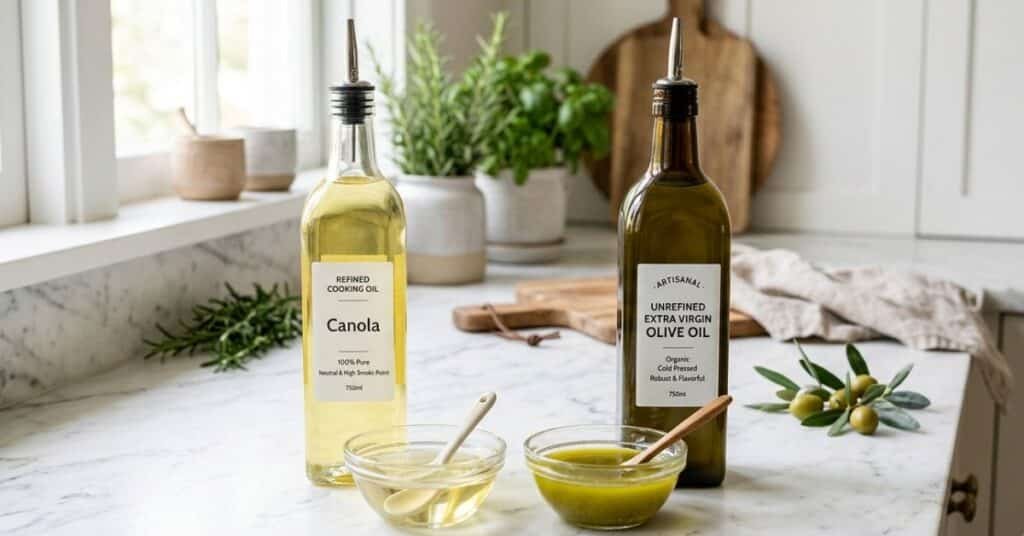
- Unrefined Oils: These are oils in their most natural state. They are pressed out of the fruit or seed without using chemicals or extreme heat. They keep all their natural vitamins, taste, and smell. They usually have a lower smoke point.
- Refined Oils: These oils go through a factory process to remove strong flavors and odors. This process makes them last longer on the shelf and gives them a higher smoke point, but it also strips away many of the healthy nutrients.
The Verdict: Whenever you can, choose unrefined or “cold-pressed” oils for the most health benefits.
Cooking Oils You Should Avoid
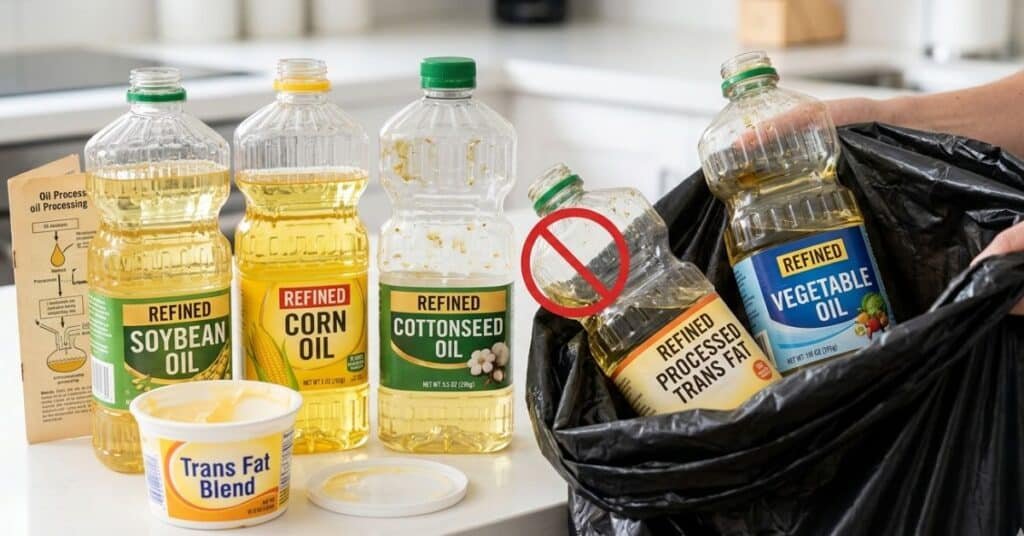
Some oils are heavily processed in large factories. They often contain high amounts of Omega-6 fatty acids. While our bodies need a little bit of Omega-6, eating too much of it can lead to swelling and inflammation inside the body.
Try to use less of these highly processed oils:
- Soybean Oil
- Corn Oil
- Cottonseed Oil
- Sunflower Oil
- Generic “Vegetable Oil”
How to Store Your Cooking Oils Properly
Buying good oil is an investment in your health. To make sure your oil stays fresh and healthy, follow these three simple rules:
- Keep it Cool: Heat makes oil spoil faster. Do not keep your oil bottles right next to your hot stove or oven. Store them in a cool pantry or cabinet.
- Keep it Dark: Sunlight can damage oil and make it turn bad (rancid). This is why the best olive oils are sold in dark green or brown glass bottles.
- Keep it Closed: Air is the enemy of fresh oil. Always make sure you screw the cap on tightly after you finish pouring.
Conclusion
Choosing the right cooking oil does not have to be stressful. By understanding a little bit about heat and reading the labels, you can make choices that help your body thrive. Start by swapping out your generic vegetable oil for a bottle of Extra Virgin Olive Oil for your salads, and keep some Avocado Oil handy for your roasting and frying.
Small changes in your kitchen lead to massive changes in your health. Happy cooking!
(FAQs)
1. What is the overall healthiest oil to cook with?
For general daily use, Extra Virgin Olive Oil is the best choice because of its high antioxidant levels. For high-heat cooking, Avocado Oil is the winner.
2. Can I use Extra Virgin Olive Oil for frying?
It is fine for light pan-frying (like cooking an egg or sautéing onions). However, do not use it for deep frying, as it will pass its smoke point and burn.
3. Are seed oils actually bad for you?
Highly processed seed oils (like corn or soybean oil) are often used in fast food and packaged snacks. Eating too much of them can cause inflammation. It is much better to choose fruit-based oils like olive or avocado oil for your home cooking.
4. How can I tell if my oil has gone bad?
Give it a smell! Good oil smells fresh or earthy. If your oil smells like old crayons, stale nuts, or old paint, it has gone bad (rancid) and you should throw it away.