
Receiving a diabetes diagnosis can feel like a life-changing event. For many, the first thought is about food: “What can I eat now?” or “Is my favorite food gone forever?” It is natural to feel worried, but here is the good news: managing your health through a 7 day diabetes meal plan for beginners is not about restriction,it’s about balance and smart choices.
By focusing on blood sugar management, you can still enjoy delicious, satisfying meals while keeping your energy levels stable. In this guide, we will break down everything a beginner needs to know, from the science of food to a practical shopping list and a full week of meals.
1. The Science of Eating for Diabetes
To manage diabetes effectively, we must understand how our body processes what we eat. There are three main concepts every beginner should know:
A. Insulin Sensitivity
Insulin is like a key that unlocks your cells to let sugar (glucose) in for energy. When you have Type 2 diabetes, your body becomes less sensitive to this key. Eating the right foods helps improve insulin sensitivity, making it easier for your body to keep sugar levels normal.
B. Complex Carbohydrates vs. Simple Carbs
Not all carbs are bad.
- Simple Carbs: Found in white bread, sugar, and soda. They digest quickly and cause a “spike” in sugar.
- Complex Carbohydrates: Found in oats, brown rice, and lentils. These digest slowly, providing steady energy without the spike.
C. Low-Glycemic Foods
The Glycemic Index (GI) ranks food based on how fast it raises blood sugar. As a beginner, your goal is to choose low-glycemic foods (like leafy greens, beans, and whole grains) most of the time.
2. Portion Control for Diabetes: The Plate Method
Before we look at the recipes, let’s talk about how much to eat. You don’t need a scale for portion control for diabetes. Just use your 9-inch dinner plate:
- 1/2 Plate (Non-Starchy Vegetables): Fill half your plate with things like spinach, broccoli, cauliflower, or peppers. They are low in calories and high in fiber.
- 1/4 Plate (Lean Protein): This includes grilled chicken, fish, eggs, tofu, or lentils. Protein helps you feel full.
- 1/4 Plate (Healthy Carbs): This is for your small serving of brown rice, a whole-wheat roti, or a sweet potato.
3. The 7-Day Diabetes Meal Plan for Beginners
This plan is designed to be simple and uses diabetic-friendly recipes that don’t require hours in the kitchen.
Quick Summary Table
| Day | Breakfast | Lunch | Dinner |
| Day 1 | Veggie Omelet | Grilled Chicken Salad | Baked Fish & Broccoli |
| Day 2 | Oats with Cinnamon | Lentil Soup (Daal) | Stir-fry Tofu & Veggies |
| Day 3 | Greek Yogurt & Berries | Chickpea Salad | Grilled Turkey/Beef Kebabs |
| Day 4 | Avocado Toast & Egg | Lettuce-wrap Tuna | Roasted Chicken & Beans |
| Day 5 | Mushroom Scramble | Clear Veggie Soup | Zucchini Noodles (Zoodles) |
| Day 6 | Chia Pudding | Whole-wheat Wrap | Cauliflower Rice Biryani |
| Day 7 | Whole-wheat Pancakes | Grilled Fish & Greens | Shrimp & Veggie Pasta |
Detailed Daily Breakdown
Day 1: Focus on Protein
- Breakfast: Two eggs whisked with spinach and onions. Serve with one slice of whole-grain toast.
- Lunch: A large bowl of mixed greens, cucumbers, and tomatoes topped with 4oz of grilled chicken breast.
- Dinner: White fish (like Tilapia) seasoned with lemon and garlic, served with steamed broccoli.
Day 2: Plant-Based Goodness
- Breakfast: Half a cup of steel-cut oats cooked in water or almond milk. Add a pinch of cinnamon to help with sugar control.
- Lunch: One cup of yellow or red lentil soup (Daal) with a side of sautéed cabbage.
- Dinner: Tofu or Paneer cubes stir-fried with bell peppers and a very small portion of brown rice.
Day 3: High Fiber Day
- Breakfast: Unsweetened Greek yogurt. Add 5-6 blueberries and a tablespoon of flaxseeds.
- Lunch: “Chana Salad”—Boiled chickpeas mixed with chopped onions, tomatoes, and lemon juice.
- Dinner: Grilled lean meat kebabs served with a side of roasted cauliflower.
Day 4: Heart-Healthy Fats
- Breakfast: Half an avocado mashed on multi-grain bread with a poached egg on top.
- Lunch: Tuna mixed with a little Greek yogurt (instead of mayo) wrapped in large romaine lettuce leaves.
- Dinner: Skinless chicken thighs roasted with rosemary and green beans.
Day 5: Low-Carb Comfort
- Breakfast: Scrambled eggs with sliced mushrooms and bell peppers.
- Lunch: A warm bowl of vegetable broth with shredded chicken and celery.
- Dinner: Use a peeler to make zucchini ribbons (Zoodles). Toss them with a fresh tomato sauce and minced lean meat.
Day 6: Creative Swaps
- Breakfast: Chia seeds soaked overnight in unsweetened milk. Top with 3-4 walnuts.
- Lunch: A small whole-wheat tortilla filled with hummus and fresh salad leaves.
- Dinner: Grate cauliflower to make “rice.” Sauté it with spices and chicken for a low-carb biryani experience.
Day 7: Weekend Balance
- Breakfast: Pancakes made with whole-wheat flour and no added sugar. Use a few strawberries for sweetness.
- Lunch: Grilled fish served with a small baked sweet potato.
- Dinner: A small serving of whole-wheat pasta loaded with grilled shrimp, garlic, and plenty of sautéed spinach.
4. Healthy Eating for Diabetics: Your Grocery List
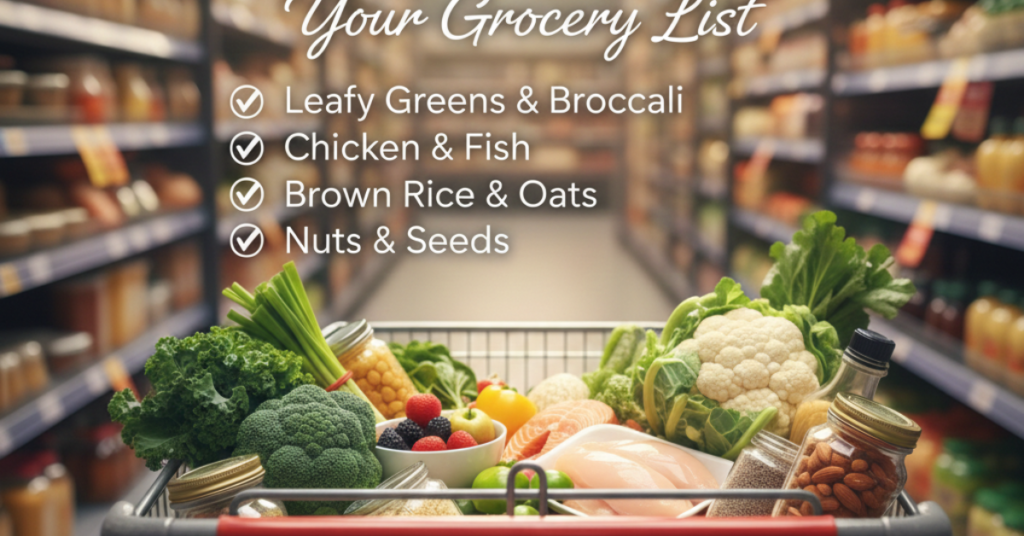
To make this plan work, you need a kitchen stocked with the right ingredients. Here is what you should buy:
- Vegetables (The more, the better): Spinach, Kale, Broccoli, Cauliflower, Okra (Bhindi), Bitter Gourd (Karela), Cucumber, Bell Peppers.
- Proteins: Fresh eggs, Chicken breast, Fish fillets, Tofu, Paneer, Lentils (Daal), Chickpeas (Chana).
- Healthy Grains: Steel-cut oats, Brown rice, Whole-wheat flour (Chaki ka aata), Quinoa.
- Fruits (Low GI): Green apples, Guavas, Strawberries, Blueberries.
- Healthy Fats & Nuts: Extra virgin olive oil, Raw almonds, Walnuts, Chia seeds.
5. 5 Critical Tips for Beginners
- Hydration is Key: Sometimes our brain thinks we are hungry when we are actually just thirsty. Drink 2 liters of water daily.
- The 15-Minute Rule: After your biggest meal, take a 15 minute gentle walk. This helps your muscles use the glucose in your blood.
- Read the Labels: Many “Sugar-Free” foods in stores are high in refined flour (Maida), which can still hurt your sugar levels.
- Meal Prep: Spend 2 hours on Sunday chopping vegetables and boiling lentils. This prevents you from ordering unhealthy food when you are tired.
- Sleep Matters: Lack of sleep can increase stress hormones, which makes your blood sugar go up. Aim for 7-8 hours.
7. Conclusion
Following a 7-day diabetes meal plan for beginners is a journey, not a destination. It’s about making progress every day. By choosing complex carbohydrates, focusing on healthy eating for diabetics, and staying active, you are taking charge of your future.
6. Frequently Asked Questions (FAQs)
Q: Can I never eat white rice again?
A: You can, but in very small amounts. It is better to mix white rice with cauliflower rice or extra vegetables to reduce the overall glycemic load.
Q: Is honey better than white sugar for diabetics?
A: Not really. While honey has some nutrients, it still causes a fast rise in blood sugar. It is best to avoid all types of added sugars.
Q: What is the best snack for a diabetic?
A: A handful of raw nuts (almonds or walnuts) or a boiled egg are the best snacks because they provide protein and healthy fats without the sugar spike.
Q: How often should I check my sugar while following this plan?
A: You should follow your doctor’s advice, but usually checking before and two hours after a meal helps you see how specific foods affect you.
Don’t be too hard on yourself if you slip up. Just make your next meal a healthy one!
Medical Disclaimer: The information in this blog is for educational purposes only and is not a substitute for professional medical advice. Always consult your doctor or a registered dietitian before starting a new diet, especially if you take insulin or other medications.