We have all been there. It is Sunday afternoon. You are feeling motivated. The kitchen counter is full of plastic containers, chicken breasts, and broccoli. You spend three hours cooking, chopping, and packing. You feel proud because you are finally taking control of your health. You are doing everything “right.”
But then, two weeks later, you step on the scale and the number hasn’t moved. Or worse, it has gone up.
Frustration sets in. You ask yourself, “Why am I working so hard with no results?”
The truth is, meal prep for weight loss is one of the best tools for getting fit, but it is very easy to do it wrong. Just because you are cooking at home doesn’t automatically mean you will lose weight. Small, hidden errors can add up and destroy your progress.
In this guide, we will explore the 5 common meal prepping mistakes that might be sabotaging your goals and exactly how to fix them.
1. The “Healthy Food” Portion Trap
This is the most common mistake beginners make. There is a big misconception that if a food is “healthy” or “clean,” you can eat as much of it as you want.
We often categorize food as “Good” or “Bad.” While avocados, nuts, olive oil, and brown rice are packed with nutrition, they are also very calorie-dense.
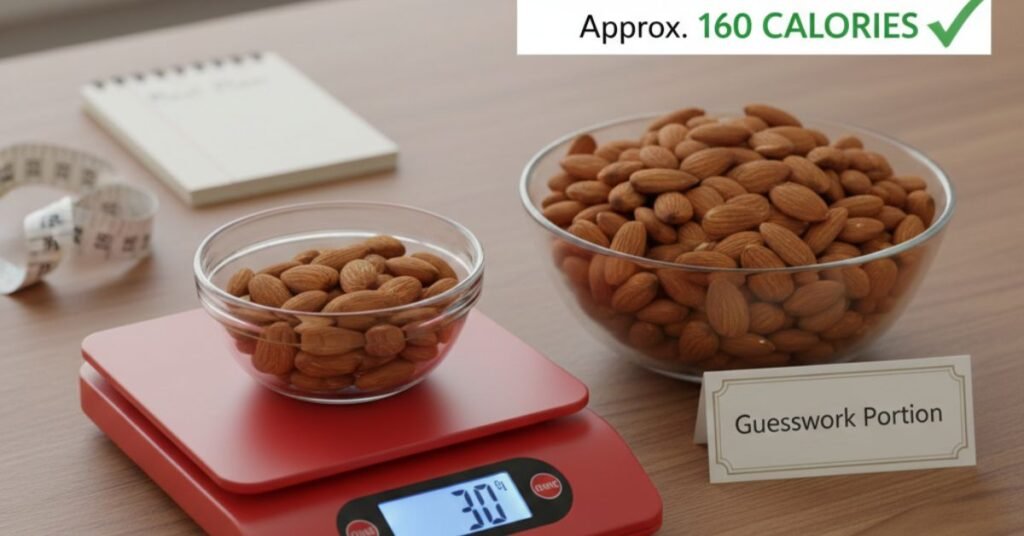
For example, you might add a “handful” of nuts to your snack box. But if you don’t measure it, that handful could be 300 calories. If you do this every day, you are eating an extra meal’s worth of calories without realizing it.
The Calorie Reality Check
Look at this table to see how “healthy” foods can pile up calories quickly:
| Food Item | Serving Size | Approx. Calories |
| Olive Oil | 1 Tablespoon | 120 cal |
| Almonds | 1 Handful (approx. 23 nuts) | 165 cal |
| Avocado | 1 Medium Avocado | 250-320 cal |
| Peanut Butter | 2 Tablespoons | 190 cal |
| Salad Dressing | 2 Tablespoons (Creamy) | 140 cal |
The Solution: Use a Portion Control Guide
- Don’t eyeball it: Our eyes are terrible at guessing weight. What looks like one serving of peanut butter is usually three.
- Weigh your food: Invest in a cheap kitchen scale. Weighing your pasta, rice, and nuts for just one week will open your eyes to what a real serving size looks like.
- Follow a portion control guide: If you don’t have a scale, use your hand. Your palm is a serving of protein, your cupped hand is carbs, and your thumb is fat.
2. Lack of Variety (The Boredom Factor)
Imagine this: It is Wednesday. You open your fridge for lunch. You see the same container of plain grilled chicken, steamed broccoli, and white rice that you had on Monday and Tuesday.
Suddenly, that meal looks very unappealing. Your coworker offers to order pizza. Because you are bored with your food, your willpower breaks, and you say “Yes.”
This is a classic example of avoiding meal prep burnout. Many people think healthy food must be boring or bland to work. They eat the exact same thing every day for 7 days. This is a recipe for failure. Food is not just fuel; it is also enjoyment.
The Solution: Rotate Your Flavors
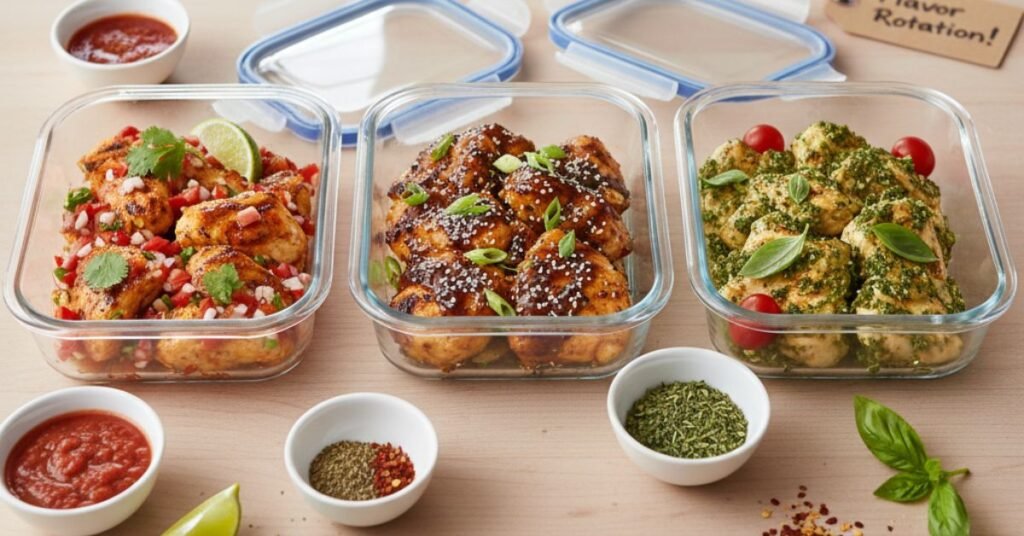
You don’t need to cook 5 different meals. You just need healthy meal prep ideas that use different spices.
- The Sauce Strategy: Cook a big batch of plain protein (like chicken). Then, divide it into three parts:
- Part 1: Add BBQ sauce.
- Part 2: Add Salsa (Mexican style).
- Part 3: Add Soy sauce and ginger (Asian style).
- Change the Texture: Don’t just boil everything. Roast your vegetables for a crunch, or mash your sweet potatoes for comfort.
3. Ignoring “Hidden” Calories (Oils and Sauces)
This is the silent killer of weight loss. You might have perfectly measured chicken and vegetables, but how did you cook them?
To lose weight, you must be in a calorie deficit. This means you burn more energy than you eat. However, cooking oils are pure fat.
- The Math: If you pour oil freely into the pan, you might use 2 tablespoons. That is roughly 240 calories. That is equivalent to a chocolate bar!
Many people also drown their healthy salads in creamy dressings like Ranch or Caesar, which are loaded with fat and sugar. You might think you are eating a low-calorie meal, but the hidden oils are pushing you into a calorie surplus.
The Solution: Be Smart with Condiments
- Use Oil Sprays: Instead of pouring oil, use a spray bottle. It coats the pan evenly but uses a fraction of the oil. This simple switch can save you hundreds of calories a week.
- Dip, Don’t Pour: Never pour dressing directly onto your salad. Keep it in a small separate container. Dip your fork in the dressing, then pick up the salad.
- Low-Calorie Swaps: Use mustard, hot sauce, vinegar, lemon juice, or salsa. These add moisture and flavor without the heavy calorie tag.
4. Prepping for Too Many Days
Enthusiasm is great, but prepping for 7 days at once is often a mistake. By Thursday or Friday, the food you cooked on Sunday has changed.
- Texture: The vegetables get soggy, and the meat gets dry and rubbery.
- Taste: The flavor starts to fade or taste “old.”
- Safety: Food safety guidelines suggest that cooked meat should only be kept in the fridge for 3 to 4 days.
When your Friday lunch smells a bit weird or looks mushy, you are very likely to throw it in the trash and buy fast food instead.
The Solution: The “3-Day Rule”
Don’t try to be a superhero.
- Prep twice a week: Do a big prep on Sunday for Mon-Wed. Then, do a mini-prep on Wednesday night for Thu-Sat.
- Invest in good meal prep containers: Use airtight glass containers. Unlike plastic, glass doesn’t hold smells, it keeps food fresher for longer, and it is safer to reheat in the microwave.
5. Imbalanced Macros (The “Hunger” Mistake)
Have you ever eaten a salad and felt hungry again one hour later? This happens when your meal prep is not balanced.
Many people focus only on “low calorie” and forget about “satiety” (feeling full). If your meal is just lettuce and a few cucumbers, your body digests it very quickly. This leads to blood sugar crashes and intense cravings for sugar later in the day.
To make a high protein lunch work for you, you need the power couple: Protein and Fiber.
The Perfect Plate Formula
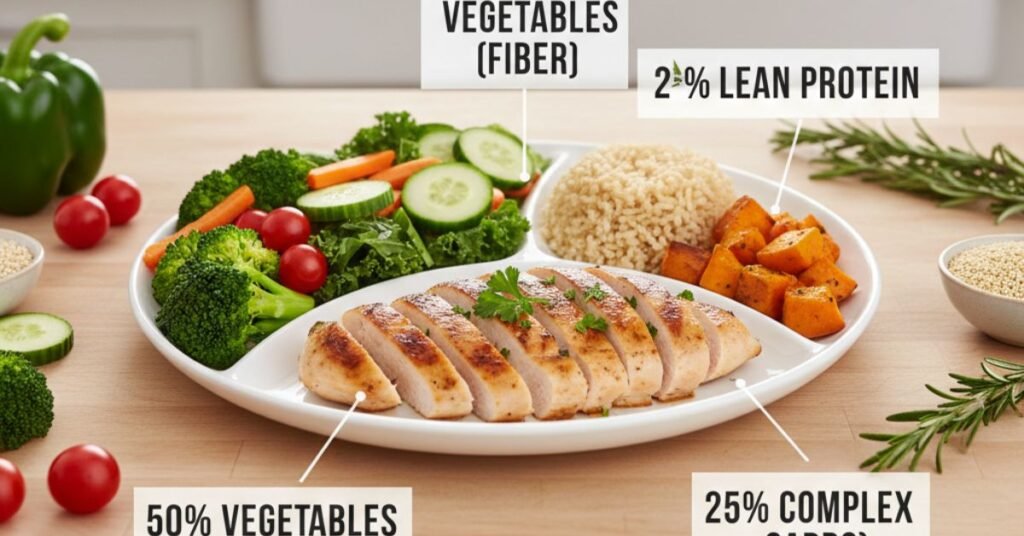
Structure every meal prep container like this table suggests:
| Nutrient | Function | Examples | Portion on Plate |
| Protein | Keeps you full & builds muscle | Chicken, Tofu, Eggs, Fish | 25% |
| Fiber | Expands in stomach to stop hunger | Broccoli, Spinach, Beans | 50% |
| Carbs | Provides energy | Sweet Potato, Rice, Oats | 25% |
The Solution: Prioritize Protein
Protein has a high “Thermic Effect,” meaning your body burns calories just digesting it. Ensure every single container has at least 25g to 30g of protein.
Conclusion
Meal prepping is a powerful habit, but it requires strategy. It is not just about putting food in a box; it is about putting the right food, in the right amounts, in the right way.
If you have been struggling with weight loss despite prepping, don’t give up. Check these 5 mistakes:
- Are you measuring your portions?
- Are you using too much oil?
- Is your food getting boring?
- Are you prepping too far in advance?
- Are you eating enough protein?
Frequently Asked Questions (FAQs)
Q1: Can I freeze my meal prep to make it last longer?
A: Yes! Soups, stews, and curries freeze very well. However, salads and watery vegetables (like cucumber) do not freeze well. If you want to prepare for the whole week, put Monday-Wednesday meals in the fridge and Thursday-Friday meals in the freezer.
Q2: Which are the best meal prep containers to use?
A: Glass containers with locking lids are the best option. They are durable, don’t stain, and are safe for the microwave and dishwasher. Plastic containers are okay, but make sure they are BPA-free.
Q3: How do I calculate my calorie deficit?
A: You can use online TDEE (Total Daily Energy Expenditure) calculators. Once you know your maintenance calories, subtract 300-500 calories from that number to find your weight loss target.
Q4: Is it okay to eat the same high protein lunch every day?
A: Nutritionally, yes. But mentally, it can be hard. If you enjoy routine, go for it! If you get bored easily, try swapping the side vegetables or the sauce to keep things interesting.
By fixing these small errors, you will turn your meal prep from a chore into a success story. Start small, be consistent, and watch the results follow!