Hi, I’m Kiran! As a professional Nutritionist, I believe that food is your greatest tool for performance. Over the years, the most common question I get asked is, “How can I lose weight without feeling hungry all the time?”
The answer is not a magic pill or a strict, boring diet. The real secret is understanding how to eat in a calorie deficit for weight loss. Today, I am going to share my step-by-step method to help you eat well, feel full, and reach your goals.
What Exactly is a Calorie Deficit?
Your body burns a certain number of calories every day just to keep you alive, breathing, and moving.
- Maintenance Calories: The exact amount of food you need to stay at your current weight.
- Calorie Deficit: When you eat fewer calories than your body burns, forcing it to use stored fat for energy.
- The Golden Rule: A safe target is usually eating 300 to 500 calories less than your maintenance level. This helps you lose weight safely and keep it off.
Step 1: Find Your Starting Point
Before you change your diet, you need to calculate maintenance calories. Here is the easiest way to do it:
- Find an Online Calculator: Search for a free “TDEE Calculator” (Total Daily Energy Expenditure).
- Enter Your Details: Put in your age, weight, height, and how active you are.
- Do the Math: Subtract 500 from your total TDEE. That new number is your daily calorie goal!
Step 2: Focus on What You Eat (Not Just How Much)
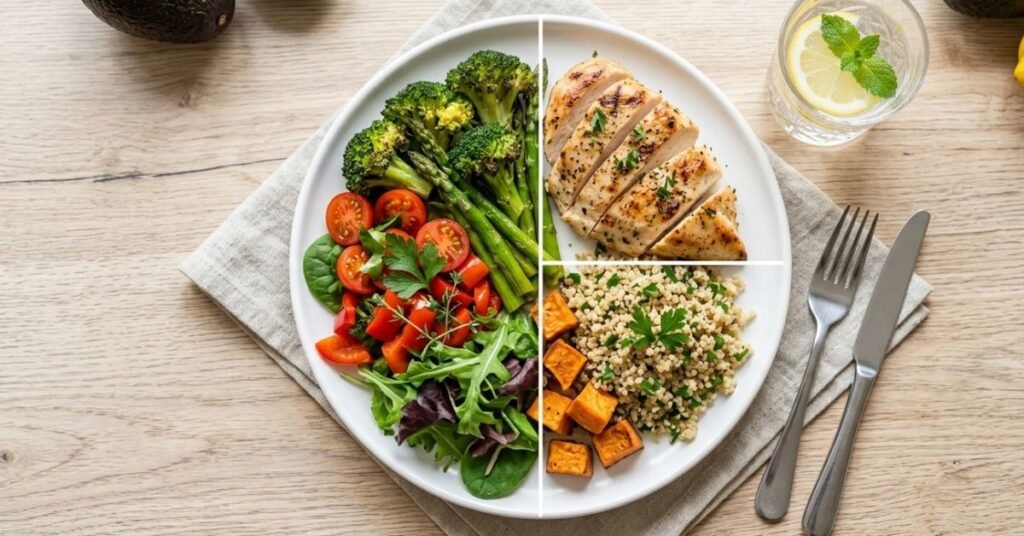
Eating less does not mean you have to be hungry. The trick is to choose foods that have high volume but low calories. Here is how to build your daily meals:
- Prioritize Protein: A high-protein meal plan protects your muscles while losing fat. Chicken breast, eggs, fish, and lentils digest slowly and keep you full for hours.
- Load Up on Veggies: Spinach, broccoli, and cucumbers are full of water and fiber. You can eat a huge bowl of salad for very few calories.
- Smart Snacking: Instead of reaching for chips, keep low-calorie snacks nearby. Berries, a small apple, or a handful of almonds are perfect for satisfying cravings.
- Drink More Water: Sometimes your body confuses thirst with hunger. Drink a glass of water before meals to help control your appetite.
Smart Food Swaps (Calorie Comparison Table)
Making small changes to your daily meals can save you hundreds of calories without sacrificing taste. Here is a simple table to guide you:
| Everyday Food | Calories (Approx.) | Healthy Swap | Calories (Approx.) | Calories Saved |
| Cooking Oil (1 tbsp) | 120 kcal | Cooking Spray (1 spray) | 10 kcal | ~110 kcal |
| Whole Milk (1 Cup) | 150 kcal | Skim Milk (1 Cup) | 80 kcal | ~70 kcal |
| White Rice (1 Cup) | 200 kcal | Cauliflower Rice (1 Cup) | 25 kcal | ~175 kcal |
| Potato Chips (1 Bag) | 160 kcal | Air-Popped Popcorn (1 Cup) | 30 kcal | ~130 kcal |
| Regular Soda (1 Can) | 140 kcal | Lemon Water / Green Tea | 0 kcal | ~140 kcal |
Sample 1-Day Nutrition Breakdown
Here is a quick look at what a balanced, deficit-friendly day might look like. This is just an example to show how much food you can actually eat!
| Meal | Food Items | Protein | Carbs | Fats | Total Calories |
| Breakfast | 2 Boiled eggs, 1 slice whole wheat toast, green tea | 16g | 15g | 10g | ~215 kcal |
| Lunch | Grilled chicken breast (150g), large cucumber & tomato salad | 45g | 10g | 5g | ~270 kcal |
| Snack | 1 Medium apple, 10 almonds | 3g | 25g | 6g | ~160 kcal |
| Dinner | Baked fish, 1 cup cooked lentils (daal), side of spinach | 40g | 40g | 8g | ~390 kcal |
| Total | 104g | 90g | 29g | ~1035 kcal |
(Note: Adjust portion sizes based on your personal calculated calorie target.)
Final Thoughts
Reaching your health goals takes time and patience. Do not rush the process by eating too little. Focus on sustainable weight loss by making small, smart choices every single day. Listen to your body, eat foods you actually enjoy, and stay consistent. You’ve got this!
(FAQs)
1. Can I lose weight in a calorie deficit without exercising?
Yes! Weight loss is primarily driven by your diet. While exercise is amazing for your overall health, heart, and building muscle, creating a calorie deficit through food alone will still result in weight loss.
2. Why am I not losing weight even though I am in a deficit?
You might be underestimating how much you are eating. Liquid calories (like oil, juices, and sugar in tea) add up quickly. It is also possible your body is holding onto water weight due to stress, lack of sleep, or a high-sodium meal.
3. Is it safe to eat less than 1,200 calories a day?
As a general rule, no. Eating too few calories can slow down your metabolism, cause muscle loss, and leave you feeling tired. Sustainable weight loss is about finding a balance, not starving yourself.
4. Can I still eat my favorite junk food?
Absolutely! The beauty of this method is that no food is strictly off-limits. As long as a slice of pizza or a piece of chocolate fits into your daily calorie limit, you will still lose weight.
Disclaimer; Consult your doctor before starting any diet plan.