
When you are living with diabetes, your relationship with food changes. One of the most common questions people ask is: “Is fruit safe for me?” Because fruits contain natural sugar (fructose), many people mistakenly believe they should be avoided entirely.
However, medical science tells a different story. Fruits are packed with vitamins, minerals, and antioxidants that are essential for your body. The secret lies in choosing the best fruits for diabetics—those that provide nutrition without causing dangerous spikes in your glucose levels.
In this guide, we will explore how you can enjoy nature’s candy while managing blood sugar naturally.
The Science: Understanding the Glycemic Index (GI)
Before we list the fruits, we must understand how they affect your body. Not all sugars are created equal. The impact of a fruit on your blood sugar is measured by the Glycemic Index (GI).
- Low GI (0–55): These fruits are digested slowly. They release sugar into the bloodstream gradually.
- Medium GI (56–69): These should be eaten in moderation.
- High GI (70–100): These cause a rapid rise in blood sugar and should be limited.
Another key factor is fiber. Fiber-rich fruits for diabetes are vital because fiber acts as a “speed bump.” It slows down the digestion process, ensuring that the natural sugar doesn’t hit your system all at once.
Top 7 Best Fruits for Diabetics
Here is a detailed look at the best options for your daily diet. These fruits are generally low in GI and high in nutrients.
1. Berries (Strawberries, Blueberries, Raspberries)
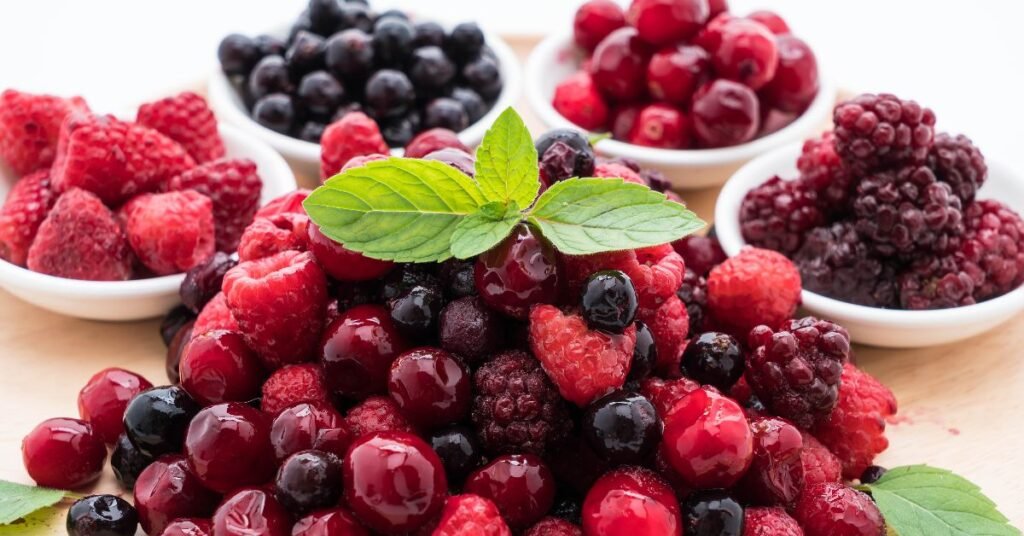
Berries are often called a “superfood” for diabetics. They are loaded with antioxidants called anthocyanins, which help improve insulin sensitivity.
- Why they work: They have a very high fiber-to-sugar ratio.
- Serving Tip: Add a handful to your morning oatmeal or Greek yogurt.
2. Apples (The “Skin-On” Rule)
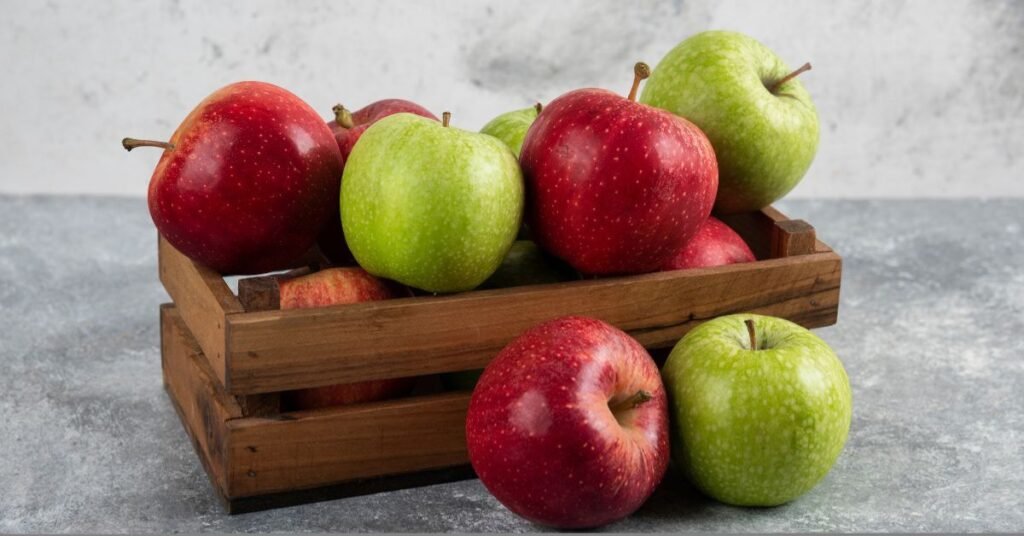
Apples are an excellent choice for diabetes-friendly snacks. They contain a specific type of soluble fiber called pectin.
- Expert Advice: Never peel your apple! The skin contains most of the fiber and antioxidants that protect your heart and blood vessels.
3. Pears

Pears are incredibly nutrient-dense. A small pear has about 5.5 grams of fiber, which is quite high compared to other fruits. This makes them great for keeping you full and satisfied.
4. Citrus Fruits (Oranges and Grapefruits)
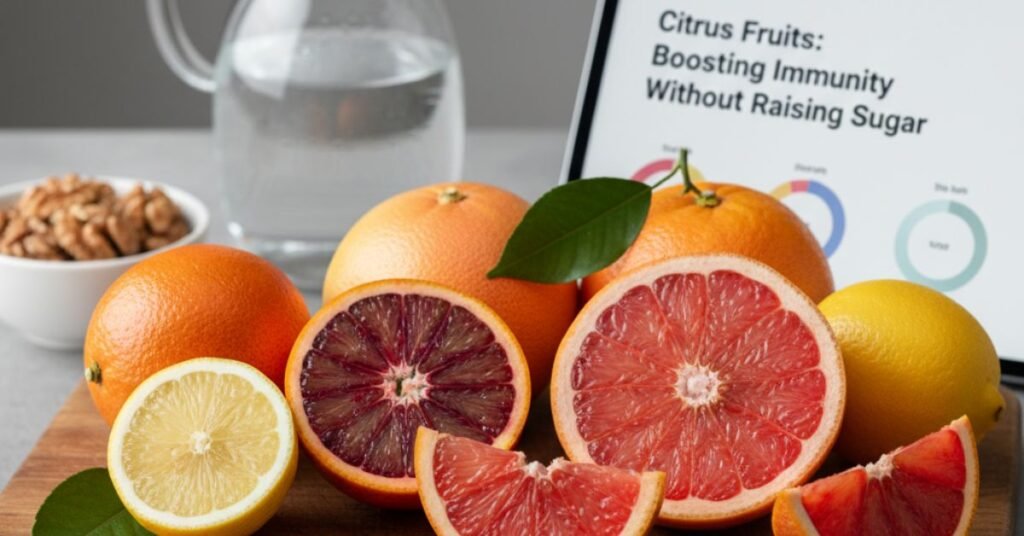
While orange juice is bad for diabetics, the whole orange is great. Citrus fruits contain “hesperidin” and “naringenin,” which are plant compounds that help reduce inflammation and stabilize blood sugar.
5. Guava (The Fiber King)
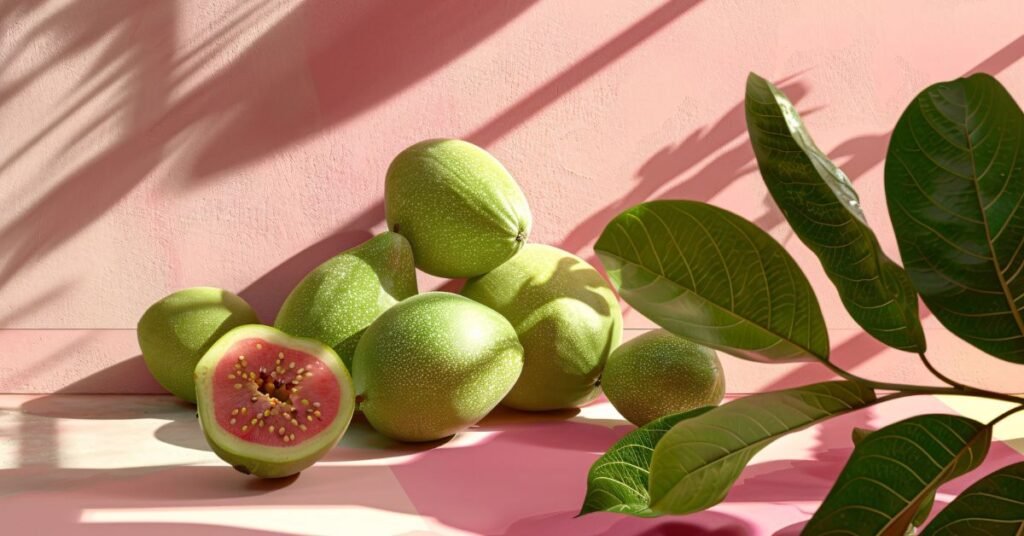
In many regions, Guava is a staple. It has a very low Glycemic Index and is one of the most fiber-rich fruits for diabetes. Some studies even suggest that guava leaf tea and the fruit itself can help lower blood sugar after a meal.
6. Cherries

Cherries have one of the lowest GI scores (around 20). They are particularly good at fighting inflammation, which is a common concern for people with Type 2 diabetes.
7. Apricots
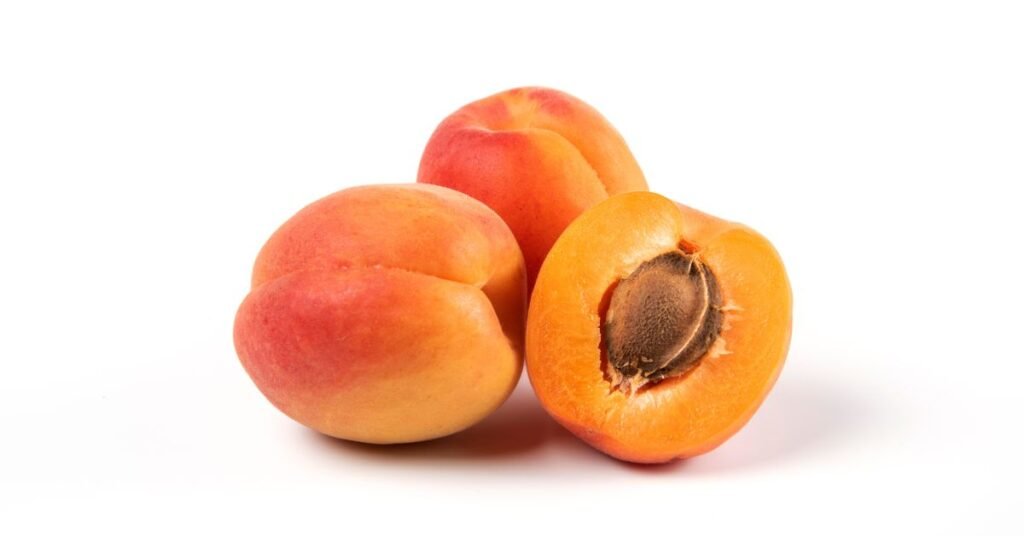
Apricots are a great source of Vitamin A and potassium. They provide a sweet taste with very few calories, making them a safe addition to your meal plan.
Comparison Table: Fruit Nutrition at a Glance
| Fruit | Glycemic Index (GI) | Key Benefit | Serving Size |
| Cherries | 20 | High Antioxidants | 1 Cup |
| Grapefruit | 25 | Heart Health | 1/2 Fruit |
| Pear | 38 | High Fiber | 1 Medium |
| Apple | 39 | Pectin (Fiber) | 1 Small |
| Orange | 43 | Vitamin C | 1 Medium |
| Strawberry | 41 | Low Calorie | 1.25 Cup |
Whole Fruits vs Fruit Juice: Why it Matters
This is the most important rule of thumb for any diabetic. You might think a glass of fresh orange juice is healthy, but for your blood sugar, it is almost the same as drinking a soda.
- The Problem with Juice: When you juice a fruit, you remove the pulp and the skin (the fiber). Without fiber, the sugar is absorbed instantly.
- The Whole Fruit Advantage: When you eat a whole fruit, your body has to work to break down the fiber. This creates a slow, steady energy release.
Verdict: Always choose the “crunch” over the “sip.”
💡 Practical Tips for Smart Fruit Consumption
To get the most out of your diet, follow these expert-backed strategies:
1. The Best Time to Eat Fruit for Diabetics
Timing is everything. Eating fruit on an empty stomach might cause a faster rise in sugar. The best time to eat fruit for diabetics is usually during the day when you are active. Avoid eating a large bowl of fruit right before bed, as your body won’t have the chance to burn that energy.
2. Smart Pairing (The “Protein Buffer”)
Never eat fruit alone. If you pair a piece of fruit with a source of protein or healthy fat, you further slow down sugar absorption.
- Example: An apple with a tablespoon of peanut butter.
- Example: Berries mixed into a bowl of plain curd (yogurt).
- Example: A handful of almonds with a pear.
3. Portion Control
Even low glycemic index fruits contain carbohydrates. You should aim for 2 servings of fruit per day. One serving is generally the size of a tennis ball.
Fruits to Eat with Caution (The “Limit” List)
No fruit is strictly “forbidden,” but some are very high in sugar and should be eaten in very small amounts:
- Mangoes: Very high in natural sugar. Limit to one small slice.
- Grapes: It is very easy to overeat these. Stick to 10-12 grapes.
- Bananas: As they ripen, their starch turns into sugar. Choose a slightly green banana over a spotted brown one.
- Watermelon: Has a high GI score (around 72). Eat only a small wedge.
Conclusion
Managing diabetes does not mean living a life without sweetness. By focusing on low glycemic index fruits and prioritizing fiber-rich fruits for diabetes, you can enjoy a variety of flavors while keeping your levels stable.
Remember, the goal is balance. Pair your fruit with protein, watch your portions, and always choose whole fruits vs fruit juice.
Frequently Asked Questions (FAQs)
Q1. Can I eat fruit if my blood sugar is already high?
If your levels are currently spiked, it is better to wait until they stabilize. Focus on protein and vegetables first, then consult your doctor about your fruit intake.
Q2. Are dried fruits safe?
Usually, no. Dried fruits like raisins or dates are very concentrated. They have much more sugar per gram than fresh fruit. Many brands also add extra sugar during processing.
Q3. Is it okay to eat fruit at night?
It is better to avoid it. Your metabolism slows down at night. If you need a snack, opt for something higher in protein like a few walnuts or a piece of cheese.
Q4. Which fruit has the lowest sugar?
Avocados and Raspberries have the lowest sugar content. Avocados are unique because they are mostly healthy fats and very low in sugar.
Q5. Should I stop eating mangoes entirely?
No, you don’t have to quit mangoes. However, you should treat them as a “dessert” rather than a daily snack. Eat a small piece after a high-fiber meal to minimize the impact.
Disclaimer: This information is for educational purposes and does not replace professional medical advice. Every individual’s body reacts differently. Please monitor your blood sugar regularly and consult your healthcare provider or a registered dietitian before making significant changes to your diet.