Written by Kiran, Founder of Prepslim
Expert Note from Kiran: In my years of working as a professional nutritionist, I have seen hundreds of clients fail on standard restrictive diets. Why? Because they are constantly hungry. True, sustainable fat loss does not come from starving your body. It comes from fueling it with the right combination of macronutrients and micronutrients that control hunger naturally. This guide will show you exactly how to do that.
When most people think about losing weight, they instantly think about eating less. They cut down their food portions, skip breakfasts, and live on plain lettuce leaves. However, this old way of dieting always leads to intense cravings, low energy, and eventual burnout. Within a few weeks, the hunger wins, and the weight comes rushing back.
To lose fat without losing your mind, you need to focus on two major nutritional powerhouses: Protein and Fiber. When you combine these two elements into your weekly routine using structured high protein high fiber meal prep for weight loss, you completely change how your body handles hunger. You feel full for hours, keep your muscles strong, and give your metabolism a permanent boost.
The Science: Why Protein and Fiber Are the Perfect Match
To understand why this strategy works so well, let us look at the science of food simplified. When you follow a structured high protein weight loss diet, you are taking advantage of what scientists call the Thermic Effect of Food (TEF). Protein requires much more energy for your body to digest compared to fats or carbohydrates. This means your body naturally burns more calories just by breaking down lean meats, eggs, and plant proteins.
Furthermore, protein directly preserves your lean muscle mass. When you are in a calorie deficit, your body naturally wants to burn both fat and muscle for energy. Eating enough protein ensures that you only burn fat, keeping your metabolic rate high.
On the other side of the equation, we have fiber. Incorporating high fiber foods for weight loss slows down the rate of digestion significantly. Soluble fiber mixes with water in your stomach to form a thick, gel-like substance. This slows down stomach emptying and keeps your blood sugar levels perfectly stable. As a result, you do not experience the sharp crashes in energy that trigger sugar and carbohydrate cravings in the afternoon.
The Synergy Effect: While protein satisfies your brain by signaling fullness hormones (like GLP-1 and PYY), fiber physically stretches your stomach walls to signal physical fullness to your nervous system. Together, they form an unbreakable defense against overeating.
The Benefits of Meal Prepping for Busy Lifestyles
Knowing what to eat is only half the battle. The real challenge is making healthy food available when you are tired, stressed, or running late for work. This is where mastering healthy meal prep ideas becomes your ultimate superpower. By spending just two hours over the weekend cooking your meals in advance, you remove all food-related decision-making from your busy weekdays.
When you have a fridge stocked with nutritious, ready-to-eat meals, you are far less likely to order high-calorie fast food or snack on office sweets. It saves you money, cuts down your mental stress, and keeps you perfectly consistent with your health goals.
Essential Ingredients to Stock in Your Kitchen
Before you begin cooking, you need to stock your kitchen with high-quality ingredients that stay fresh in the fridge for 3 to 4 days. Here are the top items I recommend for a successful prep session:
Lean Protein Sources
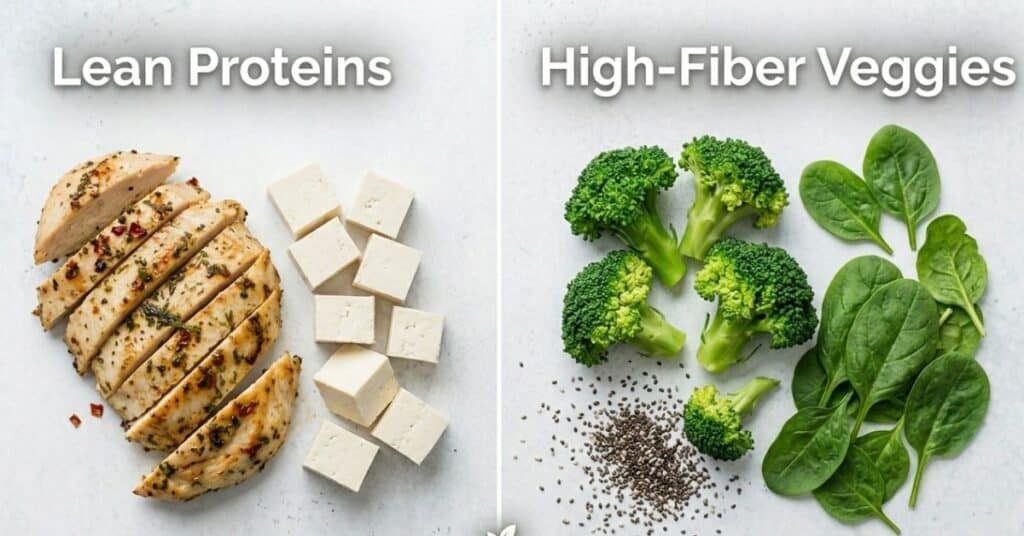
- Chicken Breast & Turkey: Extremely lean, versatile, and high in absolute protein values.
- Tofu & Tempeh: Excellent plant-based options that absorb flavors beautifully.
- White Fish & Salmon: Provides premium clean proteins alongside essential omega-3 fatty acids.
- Legumes (Chickpeas & Lentils): A unique double-win as they are rich in both protein and fiber.
High-Fiber Superfoods
- Cruciferous Vegetables: Broccoli, Brussels sprouts, cabbage, and cauliflower (low calorie, high volume).
- Leafy Greens: Spinach, kale, and Swiss chard to add micronutrients without extra calories.
- Whole Grains: Quinoa, brown rice, and farro which hold up incredibly well during storage.
- Seeds: Chia seeds and flaxseeds, perfect for adding texture and fiber to breakfasts.
Step-by-Step 5-Recipe Meal Prep Plan
Let us turn this theory into clear, actionable steps. Here is a comprehensive 5-recipe plan designed to provide a full day of balanced eating, including main meals and filling snacks.
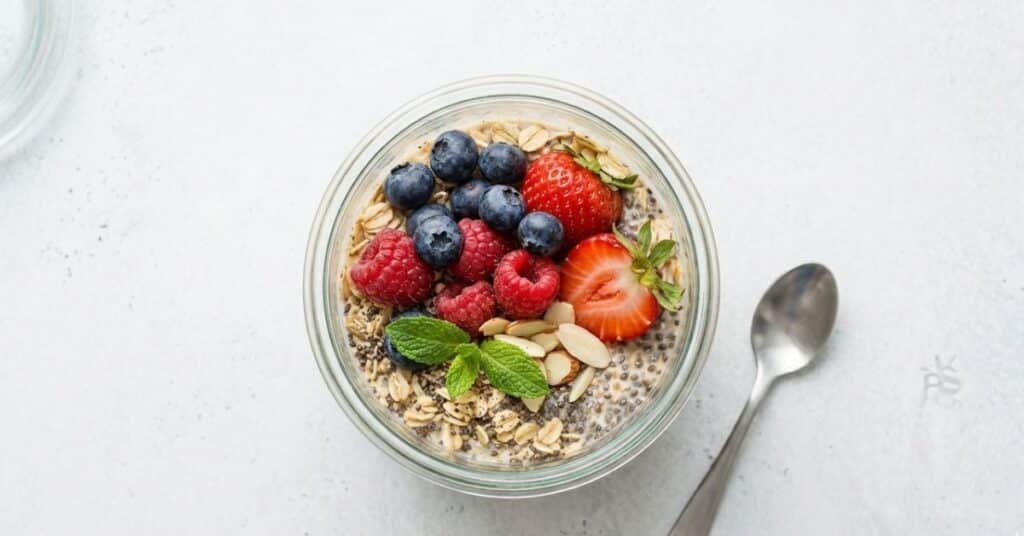
Recipe 1 (Breakfast): High-Protein Chia Berry Overnight Oats
This breakfast requires zero cooking time in the morning. Simply mix your ingredients in a glass jar the night before, and it is ready to enjoy as soon as you wake up.
- In a clean glass jar, mix 40 grams of rolled oats, 1 tablespoon of chia seeds, and 1 scoop of your favorite vanilla protein powder.
- Pour in 150ml of unsweetened almond milk and stir thoroughly until all lumps disappear.
- Top with a handful of fresh blueberries or raspberries. Seal the lid tight and place it in the refrigerator overnight.
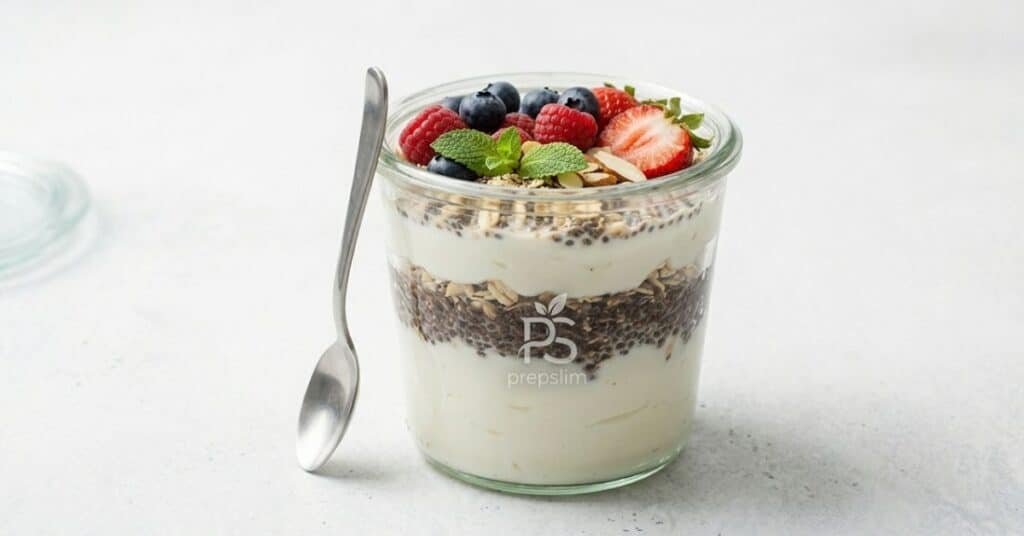
Recipe 2 (Mid-Morning Snack): Creamy Greek Yogurt & Flaxseed Parfait
A quick, cold snack that introduces gut-friendly probiotics alongside massive protein and healthy fiber textures.
- Take 150 grams of plain, unsweetened Greek yogurt and spoon half of it into a meal prep container or jar.
- Sprinkle 1 tablespoon of ground flaxseeds and 10 grams of crushed walnuts over the first layer.
- Add the remaining Greek yogurt on top, finish with a light dash of cinnamon powder, and seal tightly.
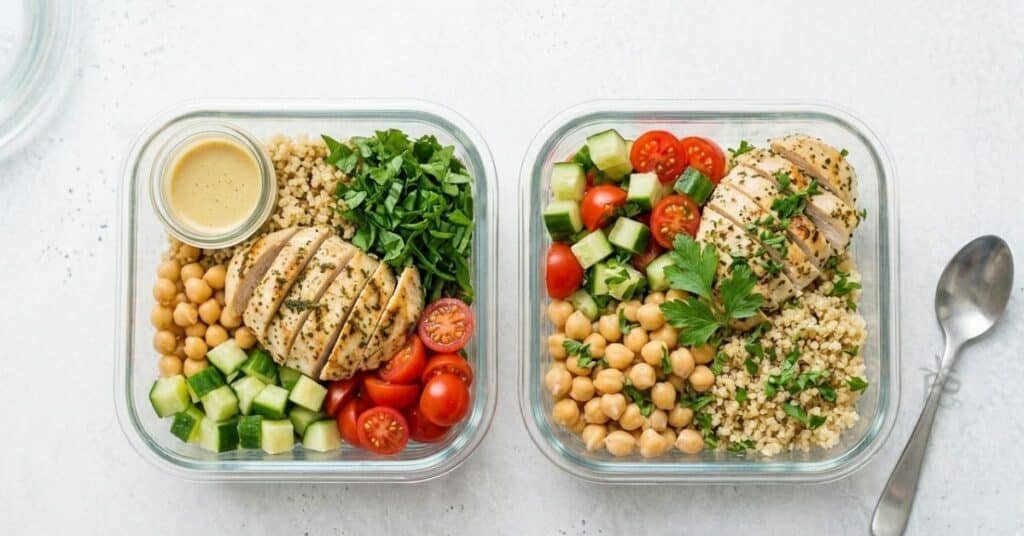
Recipe 3 (Lunch): Mediterranean Chicken and Chickpea Power Bowls
This lunch option is packed full of vibrant colors, rich textures, and deep Mediterranean flavors that keep well without turning soggy.
- Season 300 grams of chicken breast with olive oil, oregano, garlic powder, and lemon juice. Grill thoroughly until cooked through, then slice into neat strips.
- In a large bowl, mix cooked quinoa, rinsed chickpeas, diced cucumbers, halved cherry tomatoes, and finely chopped spinach.
- Divide the mixture evenly into meal prep containers. Place the sliced chicken breast right on top. Pack a small separate container with a light lemon-tahini dressing to drizzle right before eating.
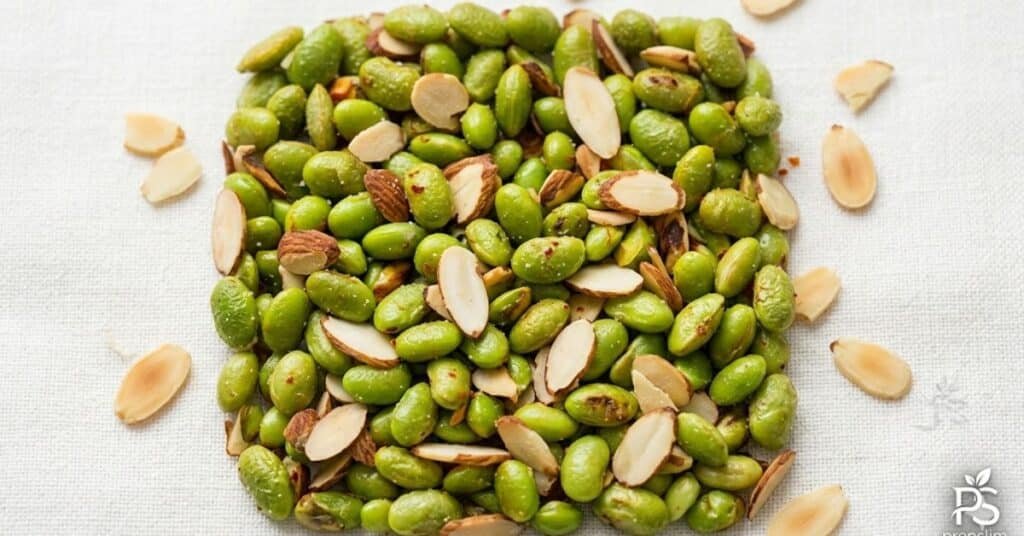
Recipe 4 (Afternoon Snack): Spicy Roasted Edamame & Almond Crunch
An incredible crunchy alternative to potato chips that provides an excellent plant-based source of satisfying dietary fiber and amino acids.
- Preheat your oven to 200°C. Toss 200 grams of frozen, shelled edamame beans dry with 1 teaspoon of olive oil, sea salt, chili flakes, and garlic powder.
- Spread them evenly on a baking sheet layered with parchment paper. Bake for 20-25 minutes until they look slightly crispy.
- Let them cool down completely, then mix them with 30 grams of raw sliced almonds. Divide into snack-sized containers.
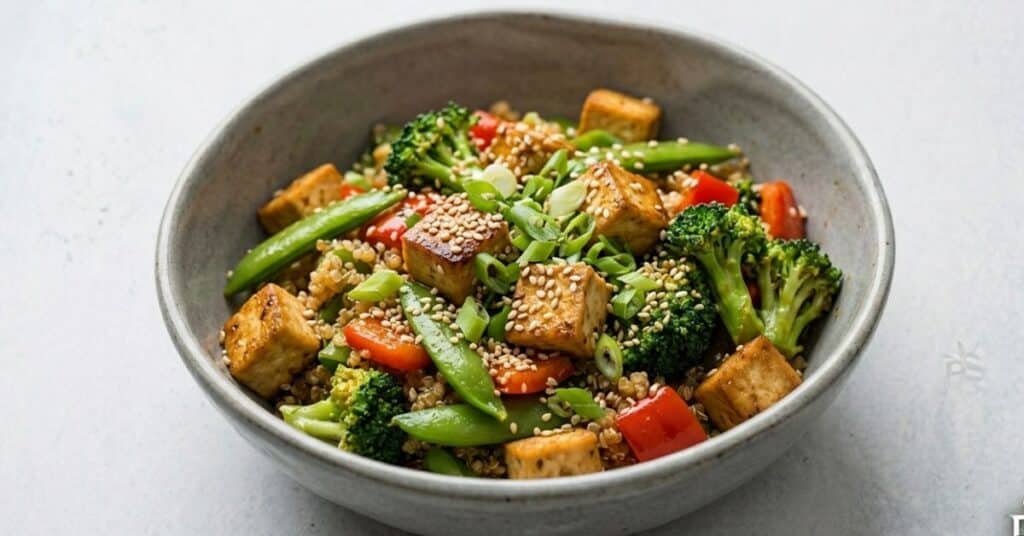
Recipe 5 (Dinner): Lean Beef or Tofu Broccoli Quinoa Stir-Fry
A comforting, warm dinner option that is low in simple carbohydrates but exceptionally high in protein and satisfying dietary fiber.
- Heat a non-stick skillet over medium heat. Sauté cubed tofu or lean minced beef with fresh ginger and minced garlic.
- Toss in plenty of fresh broccoli florets, snap peas, and sliced bell peppers. Stir-fry for 5-7 minutes until the vegetables are tender yet crisp.
- Add 2 tablespoons of low-sodium soy sauce and a splash of rice vinegar. Serve the stir-fry over a bed of fluffy cooked quinoa and top with sesame seeds.
Complete Nutritional Breakdown
For those tracking their daily macronutrients, here is a clear guide to help with your easy macro meal prep. Keeping an accurate track of your intake ensures you remain in a safe, steady calorie deficit.
| Meal Name | Calories (kcal) | Protein (g) | Dietary Fiber (g) | Carbohydrates (g) | Fats (g) |
| Chia Berry Overnight Oats | 360 kcal | 28g | 9g | 38g | 6g |
| Greek Yogurt Parfait | 210 kcal | 18g | 4g | 12g | 9g |
| Mediterranean Power Bowls | 440 kcal | 35g | 11g | 42g | 12g |
| Roasted Edamame Crunch | 180 kcal | 14g | 6g | 14g | 8g |
| Broccoli Quinoa Stir-Fry | 410 kcal | 32g | 10g | 36g | 11g |
| Daily Total | 1,600 kcal | 127g | 40g | 154g | 46g |
Professional Tips for Long-Lasting Freshness
To get the best out of your weekly low calorie meal prep, how you store your food matters just as much as how you cook it. Follow these three professional guidelines:
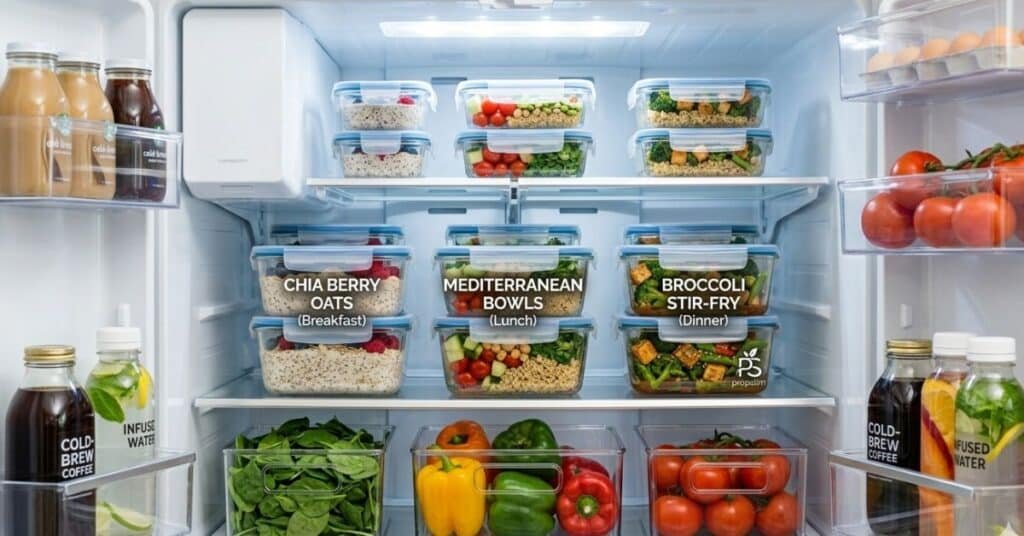
- Always Use Glass Airtight Containers: Glass containers are much better than plastic. They keep your food tasting crisp and fresh, they do not retain old food odors, and they are completely safe to microwave without any risk of chemical leaching.
- Keep Sauces Separate: Never mix your liquid dressings or sauces directly into your prepped salads or grains days in advance. This is the main reason meals turn soggy. Always keep dressings in small separate containers and mix them right before eating.
- Let Your Food Cool Completely: Putting hot food directly into a sealed container creates condensation (water droplets). This extra moisture accelerates bacterial growth and makes your fresh vegetables soft and mushy.
Kiran’s Personal Tips for Real-World Success
- The Sunday Anchor Routine: Do not try to meal prep when you are already exhausted on a weekday evening. Set aside a dedicated 2-hour block every Sunday morning. Put on some music, clear your kitchen counters, and do it all at once. It builds a powerful psychological habit.
- Freeze Your Proteins Strategically: If you prep for 5 full days, only keep meals for days 1 to 3 in the refrigerator. Put days 4 and 5 in the freezer immediately after they cool down, and move them to the fridge the night before you plan to eat them. This completely avoids that “old leftovers” taste.
- The High-Volume Veggie Hack: If you ever feel hungry despite meeting your targets, add an extra cup of steamed spinach or cucumber slices to your bowls. They add almost zero calories but introduce bulk and water content that satisfies your physical hunger signals instantly.
Conclusion: Small Steps Lead to Big Results
Losing weight permanently does not require dramatic changes or extreme restrictions. By simply prioritizing protein and fiber in your daily meals and preparing your food in advance, you build an automatic environment for weight loss success. Start small, pick one or two recipes from this guide, and build a consistent routine that works with your life.
Disclaimer: Consult your doctor before starting any diet plan. Results may vary based on individual health history, activity levels, and personal metabolic needs.
(FAQs)
1. Can I store these meal preps in the fridge for a full week?
It is best to store your high-protein, high-fiber meals in the refrigerator for up to 3 to 4 days to ensure maximum freshness and taste. If you are prepping for 5 days or more, keep meals for the first 3 days in the fridge and freeze the remaining portions immediately. Just move them to the fridge the night before you plan to eat them!
2. How much protein and fiber do I really need daily for weight loss?
For effective and healthy weight loss, a general recommendation for adults is to aim for at least 90 to 120 grams of protein and 25 to 35 grams of dietary fiber daily. However, exact numbers can change depending on your body weight, age, and daily activity levels.
3. Will eating a high-fiber diet cause bloating or gas?
If your body is not used to a high-fiber diet, introducing a lot of fiber suddenly can cause temporary bloating or mild gas. To prevent this, increase your fiber intake gradually over a couple of weeks and make sure to drink plenty of water throughout the day to help your digestive system handle the fiber smoothly.