Have you ever felt completely exhausted all day, but the minute your head hits the pillow at night, your brain refuses to shut off? Or maybe you have been eating healthy and exercising regularly, but you just cannot seem to lose that stubborn weight around your waist? I have been there, carefully counting calories and wondering what I was doing wrong. It is incredibly frustrating. But what if the problem is not your diet, but your stress levels?
Often, we blame our willpower, but the real culprit might be a silent chemical reaction happening inside us. This is where we need to talk about the signs of high cortisol in women.
Cortisol is commonly known as the “stress hormone.” It is produced by your adrenal glands (small organs on top of your kidneys). In normal amounts, cortisol is your friend. It helps you wake up in the morning, reduces inflammation, and gives you a boost of energy to face difficult situations. However, in our fast-paced, modern world, many women are constantly stressed. When stress never stops, cortisol levels stay high, and this is when it starts causing serious problems for your mind and body.
In this simple guide, we will explore the common symptoms of elevated cortisol, how it affects your body, and the steps you can take to feel like yourself again.
The Physical Signs You Can See in the Mirror
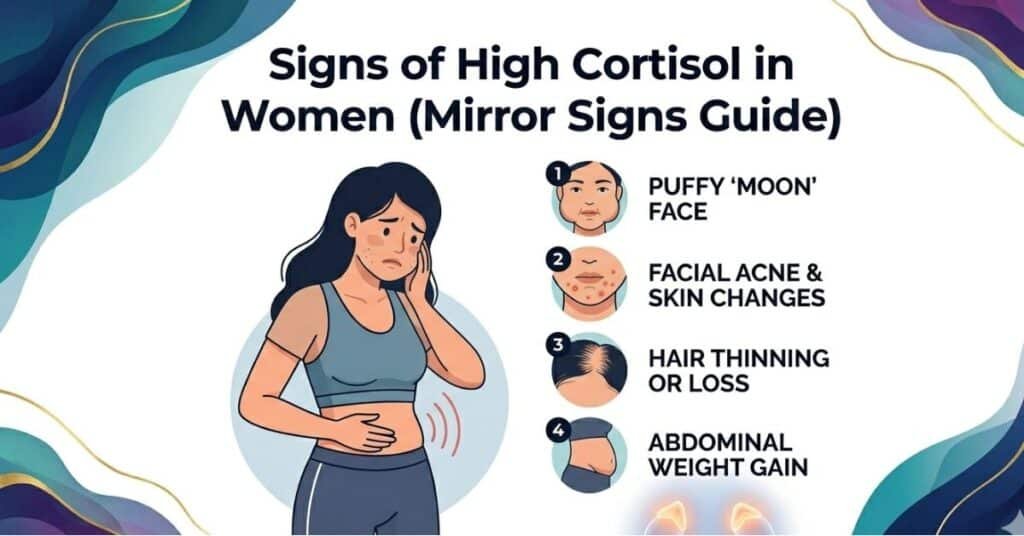
When your body produces too much cortisol over a long period, it begins to change how you look and how your body stores fat. Here are the most common visual signs:
1. The Stubborn “Cortisol Belly Fat”
One of the most classic signs of high cortisol is sudden weight gain, specifically around your midsection. Unlike normal weight gain that distributes evenly, cortisol tells your body to store fat deep inside your belly (visceral fat). If you are struggling with cortisol belly fat even though your diet has not changed, your stress hormone levels might be to blame.
2. Changes in Your Face (Moon Face)
High cortisol can cause your body to hold onto extra water and fat in your face. Women often notice that their face looks puffier, rounder, and more swollen than usual. Doctors often call this a “moon face.”
3. Skin Issues and Purple Stretch Marks
A long-term stress hormone imbalance makes your skin thinner and weaker. You might notice that you bruise very easily. Another major sign is the appearance of wide, pink or purple stretch marks (called striae), usually on your stomach, hips, or breasts. You might also experience sudden adult acne, especially along your jawline.
4. Muscle Weakness
Have you noticed that your legs and arms feel weaker when you try to lift things or climb stairs? High cortisol actually breaks down muscle tissue to use for quick energy. This often leaves women with thinner arms and legs, but a heavier midsection.
The Hidden Internal Symptoms
Not all signs of high cortisol are visible to the eye. Some of the most difficult symptoms are the ones you feel inside.
1. The “Tired But Wired” Sleep Cycle
This is perhaps the most frustrating symptom. Even though you feel completely drained of energy during the day, your brain suddenly switches on at 10 PM. You might toss and turn, unable to sleep, or you might wake up at 3 AM with a racing heart. Cortisol is supposed to drop at night to let you sleep; if it stays high, your body thinks it is in danger and refuses to rest.
2. Mood Swings and Anxiety
Your brain is highly sensitive to hormones. When cortisol is constantly elevated, it messes with your brain chemicals. You might feel anxious for no reason, easily irritated by small things, or experience unexplained sadness and depression.
3. Irregular Menstrual Cycles
Your body is smart. If it senses that you are under extreme stress (indicated by high cortisol), it decides that this is not a safe time to have a baby. As a result, it shuts down normal reproductive functions. This can lead to late periods, completely missed periods, or worse PMS symptoms.
4. Constant Cravings for Sugar and Salt
Do you find yourself reaching for chips or chocolate when you are stressed? High cortisol demands quick energy, making your brain crave high-calorie, sugary, and salty foods.
Step-by-Step: How to Get Tested
If you are reading this and thinking, “This sounds exactly like me,” it is important not to self-diagnose. Here is a simple step-by-step guide to finding out for sure:
- Step 1: Track Your Symptoms. For one week, write down how you sleep, your energy levels, and any physical changes you notice.
- Step 2: Book a Doctor’s Appointment. Bring your notes to your healthcare provider and explain your concerns about a stress hormone imbalance.
- Step 3: Take the Right Tests. Doctors usually use a blood test, a 24-hour urine test, or a late-night saliva test to check your cortisol levels accurately. Based on the results, they can discuss proper high cortisol treatment for females.
The Cortisol-Balancing Diet
Food is medicine. What you eat can either increase your stress hormones or help calm them down. To balance your body, focus on whole foods that reduce inflammation.
Here is a simple nutrition table to guide your grocery shopping:
| Food Category | Best Examples to Eat | How It Helps Lower Cortisol |
| Magnesium-Rich Foods | Spinach, Pumpkin Seeds, Almonds | Magnesium naturally relaxes the nervous system and helps improve sleep quality. |
| Healthy Omega-3 Fats | Walnuts, Chia Seeds, Salmon | Omega-3s reduce inflammation in the body and protect brain health from stress. |
| Vitamin C Powerhouses | Oranges, Bell Peppers, Strawberries | The adrenal glands need Vitamin C to regulate cortisol production properly. |
| Gut-Healthy Probiotics | Yogurt, Kefir, Kimchi | A healthy gut lining sends calming signals to the brain, improving mood. |
| Hydration | Plain Water, Herbal Chamomile Tea | Dehydration causes physical stress in the body, which immediately spikes cortisol. |
Step-by-Step: How to Lower Cortisol Naturally

Medication is sometimes necessary, but lifestyle changes are the most powerful tool you have. Here is a simple, step-by-step morning routine you can start tomorrow to learn how to lower cortisol naturally:
- Step 1: Avoid the Phone. Do not look at your phone or read the news for the first 30 minutes after waking up. Bad news triggers an immediate stress response.
- Step 2: Get Morning Sunlight. Step outside for 10 minutes. Natural sunlight in your eyes helps reset your brain’s clock, telling it to produce cortisol now so it can drop naturally at night.
- Step 3: Eat Protein for Breakfast. Do not drink coffee on an empty stomach. Eat eggs or a protein shake first. Coffee on an empty stomach spikes cortisol and blood sugar, leading to a mid-day crash.
- Step 4: Practice Gentle Movement. Instead of high-intensity workouts (which can temporarily raise cortisol), try 15 minutes of gentle stretching, yoga, or a slow walk.
Conclusion
Living with high cortisol can feel like you are fighting against your own body. The sudden weight gain, the sleepless nights, and the constant anxiety can drain your joy. However, by recognizing the signs early, changing your diet, and taking time to breathe and slow down, you can teach your body that it is safe again. Be patient with yourself. Healing your hormones takes time, but small, daily habits will eventually bring your body back into a healthy, peaceful balance.
Frequently Asked Questions (FAQs)
1. How long does it take to lower cortisol levels?
It typically takes 4 to 12 weeks of consistent lifestyle and diet changes to see a significant drop in cortisol and a reduction in symptoms like belly fat.
2. Can high cortisol cause hair loss in women?
Yes. High cortisol can push hair follicles into a “resting phase,” leading to thinning hair or excessive shedding over time.
3. Does coffee increase cortisol?
Yes, caffeine stimulates the adrenal glands. If you are already stressed, drinking multiple cups of coffee can keep your cortisol levels dangerously high all day.
4. What is the best exercise for high cortisol?
Walking and Yoga are the best. High-intensity cardio can actually increase cortisol, so if you are already burnt out, “slow is better.”
5. Can I test my cortisol levels at home?
There are saliva test kits available, but it is always best to visit a doctor for a professional blood or 24-hour urine test for accuracy.
Disclaimer: Consult your doctor before starting any diet plan. This article is for informational purposes only and does not replace professional medical advice.