In the ever-evolving world of health and fitness, two major names are dominating the conversation today: Intermittent Fasting (IF), the proven and time-tested classic, and the highly viral 30-30-30 Rule.
If you are trying to shed some extra pounds and get healthier, you have probably asked yourself: “Should I skip breakfast completely, or should I eat a heavy protein meal the moment I wake up?” It can be incredibly confusing!
In this comprehensive guide, we are going to dive deep into the science behind both methods. By comparing the 30-30-30 rule and intermittent fasting side-by-side, we will help you figure out exactly which approach is the best fit for your unique body and lifestyle. Let’s dive in!
1. What is the 30-30-30 Rule? (The Viral Trend)
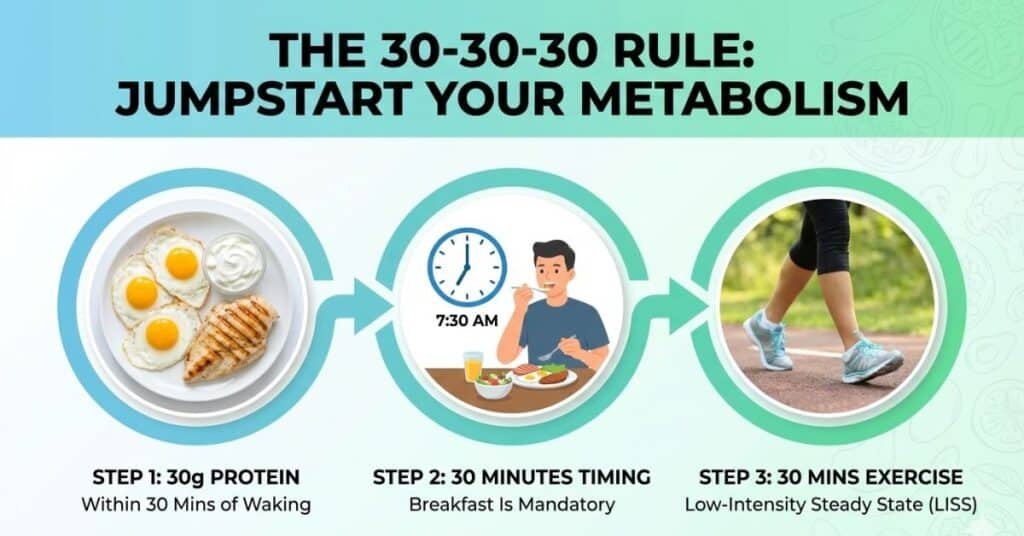
The 30-30-30 rule was recently popularized by human biologist and researcher Gary Brecka. Unlike restrictive diets, this method is all about firing up your metabolism first thing in the morning. It consists of three very simple, structured steps:
- 30 Grams of Protein: Consume at least 30 grams of protein within the first 30 minutes of waking up.
- 30 Minutes Timing: This meal must be your breakfast, eaten almost immediately after you get out of bed.
- 30 Minutes of Exercise: Right after your breakfast, do 30 minutes of light, low-intensity steady-state (LISS) exercise. Think a brisk walk, a gentle bike ride, or morning yoga.
The Science: Starting your day with protein is one of the most effective metabolism boosting habits you can develop. It requires your body to use more energy to digest the food (known as the Thermic Effect of Food). Furthermore, the high-protein breakfast benefits are massive: it stabilizes your blood sugar for the rest of the day, protects your muscle mass, and completely crushes those mid-day sugar cravings.
2. What is Intermittent Fasting? (The Proven Classic)
Intermittent Fasting (IF) isn’t a diet that tells you what to eat; it is an eating schedule that tells you when to eat. The most popular variation is the 16:8 method. This means you fast (eat nothing) for 16 hours and consume all your daily calories within an 8-hour window. For most people, this simply means skipping breakfast and eating from noon to 8:00 PM.
The Science: The true magic of this method lies in the connection between insulin sensitivity and fasting. Every time you eat, your body releases insulin. When you fast for extended periods, your insulin levels drop significantly. This low-insulin state signals your body to stop storing fat and start burning stored body fat for energy. It also triggers a process called autophagy, where your body cleans out damaged cells, promoting longevity and a healthy gut.
3. Direct Comparison: 30-30-30 vs. Intermittent Fasting
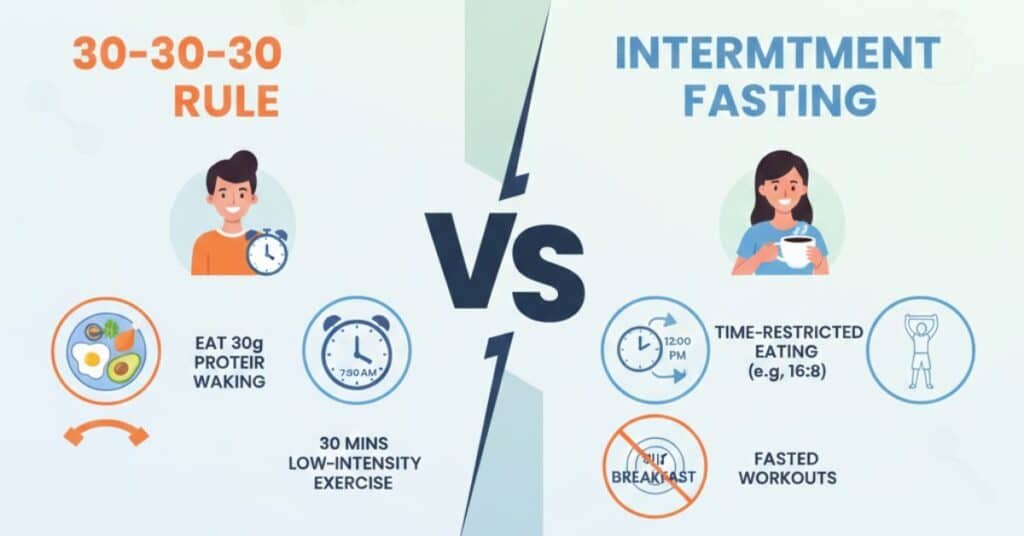
Both methods are fantastic, but they work in entirely different ways. Let’s look at a side-by-side comparison to see the differences clearly:
| Feature | 30-30-30 Rule | Intermittent Fasting |
| Main Focus | Eating protein right away | Restricting your eating time |
| Breakfast | Absolutely mandatory | Usually skipped entirely |
| Energy Levels | High and stable all day long | Might cause fatigue in the beginning |
| Ease of Use | Requires morning discipline & cooking | Very easy for busy people |
| Sugar Cravings | Protein eliminates sweet cravings early | Fasting window might trigger hunger |
4. The Hidden Factor: Stress and Hormones
Here is a crucial biological fact that many fitness influencers forget to mention: the powerful link between cortisol levels and weight gain. Cortisol is your body’s primary stress hormone.
- For some people, especially women or individuals with high-stress jobs, waking up and pushing through a long morning fast can actually cause the body to panic. This spikes cortisol levels. When cortisol is high, your body desperately holds onto fat, particularly around the belly area.
- On the flip side, the 30-30-30 rule tells your body first thing in the morning: “Food is abundant, you are safe, there is no need to stress.” This keeps cortisol levels low and hormones balanced, making it much easier for a stressed body to finally let go of stubborn weight.
5. Which Rule is Best for YOU?
Because of “bio-individuality,” no two bodies are exactly the same. You need to choose the method that fits your daily life.
You should choose the 30-30-30 Rule if:
- You wake up feeling extremely hungry and shaky.
- You struggle with hormonal imbalances like PCOS, thyroid issues, or high stress.
- You have a terrible sweet tooth and crave sugar in the afternoons.
- You love exercising in the morning but feel weak doing it on an empty stomach.
You should choose Intermittent Fasting if:
- You naturally do not feel hungry in the mornings.
- Your mornings are chaotic, and you don’t have time to cook a healthy breakfast.
- You suffer from digestive issues and want to give your stomach a long break.
- You want the mental clarity and focus that often comes with a fasted state.
6. Top Tips for Success

If you are just starting your fitness journey, remember that neither of these methods is a magic pill. You need solid foundations. Here are some of the best weight loss tips for beginners:
- Be Consistent: Your body needs time to adapt. Pick one method and stick with it for at least 4 to 6 weeks before deciding if it works.
- Hydration is Key: Whether you are fasting or eating 30 grams of protein, you need plenty of water. Aim for at least 8-10 glasses a day.
- Prioritize Sleep: If you are sleeping less than 7 hours a night, your hormones will be a mess, and neither IF nor the 30-30-30 rule will save you.
- Quality Over Quantity: When you break your fast or eat your meals, choose whole foods. Avoid ultra-processed junk food, sodas, and refined carbs.
Final Verdict
Both the 30-30-30 rule and Intermittent Fasting are incredible tools in the fitness world. However, at the end of the day, successful weight loss comes down to managing your calories, balancing your hormones, and finding a routine you can actually stick to for years, not just weeks.
Listen to your body. Try the 30-30-30 rule for a couple of weeks if you feel energetic and your cravings disappear, keep going! If you feel overly full and sluggish in the mornings, switch to Intermittent Fasting.
(FAQs)
Q1: Can I drink coffee while doing the 30-30-30 rule?
Yes, absolutely! However, try to drink black coffee or coffee with minimal milk/sugar. It is best to drink it alongside or right after your high-protein breakfast to prevent an unnecessary cortisol spike.
Q2: Which method causes faster weight loss?
Both create weight loss by helping you maintain a calorie deficit. IF is often “faster” for people who find it easy to skip meals. However, if skipping breakfast makes you binge-eat later in the day, the 30-30-30 rule will give you better, more sustainable results long-term.
Q3: Can I do Intermittent Fasting and the 30-30-30 rule at the same time?
Technically, it is very difficult. The 30-30-30 rule requires eating immediately upon waking, while IF usually requires skipping morning meals. It is much more effective to focus 100% on just one method.
Q4: What should I eat to get 30 grams of protein in the morning?
Great options include 3 whole eggs paired with some Greek yogurt, a high-quality whey protein shake, cottage cheese, or leftover chicken/steak from the night before.
Which of these two methods sounds easier for your daily routine? Have you tried either of them? Let me know your thoughts in the comments below!