Have you ever tried strict diets that leave you feeling hungry and tired? If counting every calorie is not working for you, there is a new, viral trend that is very easy to follow. It is called the 30-30-30 rule.
Unlike hard diets where you have to starve, this method is simply about how you start your morning. Popularized by human biologist Gary Brecka, this routine helps balance your hormones and tells your body to burn fat all day long.
In this complete guide, we will explore what the 30-30-30 diet for weight loss is, why it works, and how you can easily make it a part of your daily life.
What is the 30-30-30 Rule?
The best thing about the 30-30-30 rule is that it is very simple. It is not a hard meal plan. It is just a morning habit.
Quick Summary Table
| Step | Action | Why It Helps |
| Step 1 | Eat 30 Grams of Protein | Keeps you full and controls blood sugar. |
| Step 2 | Within 30 Minutes of Waking | Stops your body from storing fat due to stress. |
| Step 3 | 30 Minutes of Light Exercise | Burns stored body fat instead of sugar. |
The Science: Why Does It Work?
When you wake up after a full night of sleep, your body has low blood sugar. If you drink sugary tea or eat sweet bread right away, your blood sugar shoots up. A few hours later, it drops fast, making you tired and hungry again.
Here is how to boost metabolism naturally using this rule:
- It Controls Blood Sugar: Protein digests slowly. This stops huge blood sugar spikes and keeps your energy steady.
- It Burns Fat, Not Muscle: Because you did not eat a lot of sugary carbs, your body does not have quick sugar to burn during your morning exercise. Instead, it uses stored fat for energy.
- It Stops Cravings: Starting the day with protein turns off the hunger alarms in your brain so you eat less junk food later.
Step 1: Eat 30 Grams of Protein

The first part of the rule is to make sure you get enough protein. Thirty grams might sound like a lot, but it is easy if you pick the right foods.
Eating a high-protein breakfast keeps you full, preserves your muscle mass, and stops you from snacking before lunch. Here are some quick and easy high protein breakfast ideas to help you hit your goal:
| Food Item | Amount Needed | Estimated Protein |
| Whole Eggs | 4 large eggs | 24 grams (Add cheese to reach 30g) |
| Greek Yogurt | 1.5 cups (Plain) | 30 grams |
| Cottage Cheese | 1 cup | 25-28 grams |
| Protein Powder | 1 scoop mixed with water | 25-30 grams |
| Smoked Salmon | 4-5 ounces | 25-30 grams |
Step 2: Eat Within 30 Minutes of Waking Up

Timing is the second most important part of this rule. You must eat your protein within the first 30 minutes of waking up.
Why the 30-minute window?
When you wake up, your body’s stress hormone (cortisol) is high. If you wait too long to eat, your body thinks it is starving and starts to store fat to save energy. By eating protein quickly, you tell your body that food is available, and it is safe to start burning fat for fuel.
Step 3: Do 30 Minutes of Light Exercise
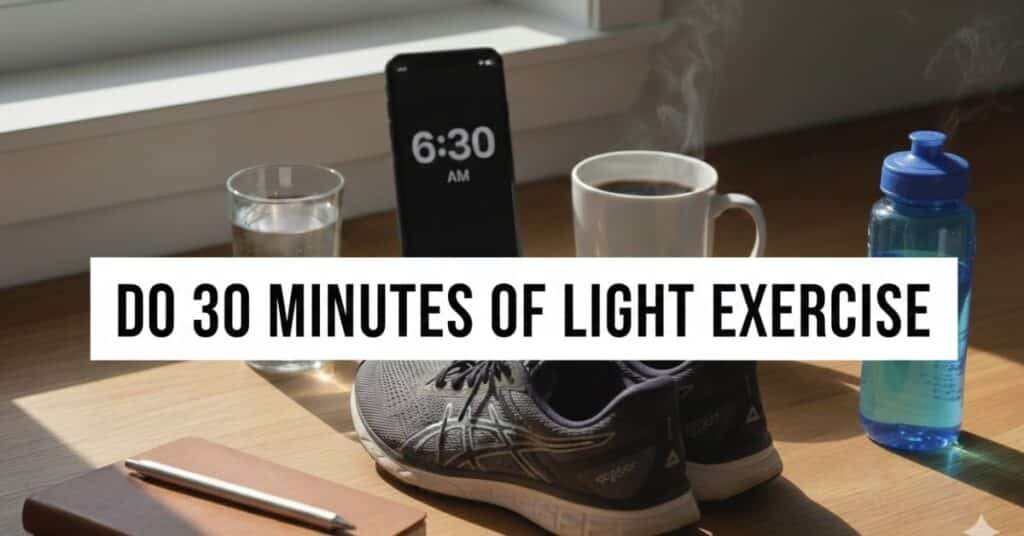
The final step is to move your body for 30 minutes. But there is a very important rule here: Do not do heavy or fast workouts. This routine requires low-intensity steady state cardio (LISS). If you do a hard workout (like running fast or heavy weightlifting) right after eating, your body gets stressed. It might burn your muscles for quick energy instead of burning fat.
Best Exercises for Step 3
Your heart rate should go up just a little bit. You should be able to talk easily while doing this exercise without losing your breath.
- Brisk Walking: A simple 30-minute walk outside or on a treadmill.
- Slow Cycling: Riding a bike at a comfortable, easy speed.
- Swimming: A very relaxed swimming session.
- Light Yoga: Gentle stretching to wake up your muscles.
| Good (Light Exercise) | Bad (Heavy Exercise) |
| Normal Walking | Fast Running or Sprinting |
| Slow Cycling | Hard Gym Workouts (Heavy Weights) |
| Gentle Yoga | Jumping Jacks or CrossFit |
The Benefits of This Morning Routine
Creating a solid morning routine for fat loss improves your whole day. Here is what happens when you follow this rule consistently:
- All-Day Energy: You will not feel sleepy in the afternoon because your blood sugar is stable.
- Less Hunger: You will naturally want to eat smaller, healthier meals at lunch and dinner.
- Better Focus: Your brain gets steady energy, making it easier to work or study.
- Good Digestion: Walking after a meal is a great way to stop stomach bloating and improve gut health.
Common Mistakes to Avoid
To get the best results, make sure you do not make these simple mistakes:
- Waiting Too Long to Eat: Waking up and looking at your phone for an hour before eating ruins the rule. Eat first!
- Eating Too Many Carbs: This is a protein-focused rule. If you eat 30 grams of protein but also eat a big plate of sugary pancakes, it will not work.
- Working Out Too Hard: Remember to keep your exercise light and easy. Do not push your body to the limit in the morning.
- Being Inconsistent: You should try to do this every day, or at least 5 days a week, to see real changes.
Final Thoughts
The 30-30-30 rule is a very safe and healthy way to live. It is not a magic trick, but it is a great way to fix your daily habits. By simply waking up, eating 30 grams of good protein, and taking an easy 30-minute walk, you can completely change your body and your health.
It needs no expensive gym machines and no starving. Try it for 30 days and see how much better you feel!
(FAQs)
To help you understand this diet better, here are the most common questions people ask:
1. Can I drink coffee or tea before my 30 grams of protein?
It is better to eat your protein first. However, if you must have coffee, try to avoid adding sugar or heavy cream, as these can spike your insulin and stop the fat-burning process.
2. What if I am not hungry within 30 minutes of waking up?
Many people find it hard to eat a big meal so early. If you are not hungry, try a liquid option like a protein shake. It is easier to consume and still follows the rule.
3. Can vegetarians follow the 30-30-30 rule?
Yes! Vegetarians can use Greek yogurt, cottage cheese, soy milk, or plant-based protein powders. Just make sure the total protein reaches 30 grams.
4. Do I have to do this every single day?
Consistency is key. While doing it 5 days a week is good, doing it every day for the first 30 days will give you the best results for your metabolism.
5. Is this rule okay for people with Type 2 Diabetes?
This rule is often great for blood sugar control, but because it involves a high-protein intake, you should always talk to your doctor first to make sure it is safe for your specific health needs.
6. Can I do the exercise first and then eat?
No. The sequence is very important. You must eat the protein before the 30 minutes of light exercise to protect your muscles and signal your body to burn stored fat.
(Note: If you have diabetes or kidney problems, always ask your doctor before starting any high-protein diet to make sure it is safe for you.)