A Quick Update from Kiran: “I’ve revisited this guide for February 2026 to ensure our community has the most accurate data. Since nutrition science is always evolving, I’ve added new insights on protein bioavailability and cost-effective meal prepping to help you hit your 2500-calorie goal without the guesswork. Enjoy the fresh tips!”
Are you trying to build muscle mass, or is your lifestyle so active that you require a high amount of energy throughout the day? If yes, you need a structured 2500 Calorie Meal Plan. This calorie intake is ideal for bodybuilders, athletes, or those who need high energy.
In this guide, we will provide you with a detailed high-protein diet chart, macronutrient breakdown, and essential tips.
The 2026 Approach to Performance Nutrition
In recent years, the conversation around high-calorie diets has shifted from “dirty bulking” (eating anything to hit calorie goals) to “metabolic efficiency.” In 2026, a 2500-calorie plan isn’t just about hitting a number; it is about fueling your body with nutrient-dense foods that reduce inflammation and improve recovery times. This updated guide focuses not only on muscle protein synthesis but also on gut health and sustained energy release, ensuring you don’t just look strong, but feel energetic throughout the day.
Understanding Your Needs: What Does 2,500 Calories Look Like?
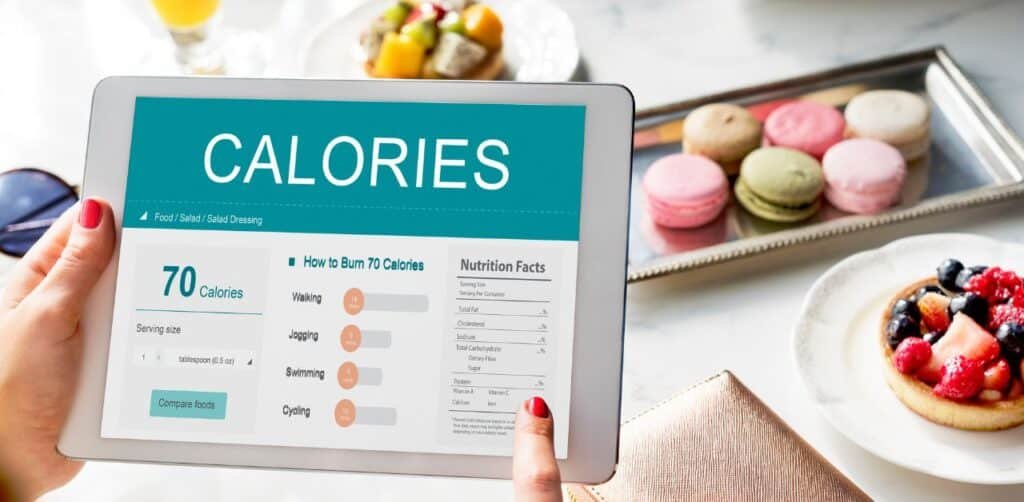
Typically, an average adult requires around 2000 calories for maintenance. A 2500-calorie plan indicates that you are either:
- Muscle Gain/Bulking: You require a calorie surplus for muscle growth.
- Highly Active: You engage in high-intensity training or strenuous manual labor.
Based on your goals, this plan supports healthy weight gain and muscle recovery.
2500-Calorie High-Protein Meal Plan (Diet Chart)
In a High-Protein plan, our objective is to include maximum protein to support muscle repair and growth.
Macronutrient Breakdown
For a high-protein plan, we will target the following ratio:
| Nutrient | Percentage (Approx.) | Calories | Grams (Approx.) |
| Protein | 35% | 875 Cal | 218g |
| Carbohydrates | 45% | 1125 Cal | 281g |
| Fats | 20% | 500 Cal | 55g |
The High-Protein Gut Connection
One aspect often overlooked in high-protein diets is digestion. Consuming over 180g of protein daily can tax your digestive system if not paired with the right fiber intake. To maximize nutrient absorption (bioavailability), this updated plan emphasizes “digestive support.” We recommend adding fermented foods like yogurt, kimchi, or a quality probiotic supplement to your routine. Remember, it’s not just about what you eat, but what your body actually absorbs.
7-Day Sample 2500 Calorie Diet Plan
This 2500 calories per day plan provides variety and balance for the entire week.
| Day | Breakfast | Lunch | Evening Snack | Dinner |
| Monday | 4 Egg Omelette + 1 cup Oatmeal + Apple | 200g Grilled Chicken + 1.5 cup Brown Rice + Salad | Protein Shake + Almonds (10) | 200g Fish Curry + 2 Roti + Mixed Vegetables |
| Tuesday | 1 cup Greek Yogurt + Berries + Honey | 200g Paneer Bhurji + 2 Whole Wheat Roti + Salad | Peanut Butter (2 tbsp) Sandwich (Whole Wheat) | 200g Lean Beef/Mutton (less oil) + Baked Potato |
| Wednesday | Protein Pancakes (2) + Banana | 200g Lentils (Daal) + 1.5 cup Rice + Curd | Hard-boiled Eggs (2) + Fruit | Chicken Biryani (moderate portion) + Raita |
| Thursday | 4 Egg Whites (scrambled) + 2 Whole Wheat Toast + Avocado | 200g Fish Fillet + 1 cup Sweet Potato + Salad | Protein Bar + Coffee/Tea (sugar-free) | Chicken/Veggie Stir-fry + 1 cup Noodles |
| Friday | 1 cup Cottage Cheese (Paneer) + Fruits | 200g Grilled Tofu + Quinoa (1.5 cup) + Salad | Protein Shake + Orange | 200g Turkey/Chicken Breast + Roasted Vegetables |
| Saturday | 4 Whole Eggs + Whole Wheat Bread Toast (2) + Juice | Chicken/Vegetable Sandwich (Large) + Soup | Greek Yogurt + Walnuts (7) | Rajma-Chawal (kidney beans and rice, large portion) |
| Sunday | Smoothy (Protein Powder, Spinach, Banana, Milk) | Chicken/Paneer Salad (Large portion) + Sweet Potato | Apple slices with Peanut Butter | Whole Wheat Pasta with Chicken/Lentil Sauce |
Food Items To Limit
Even when consuming 2500 calories, it is essential to maintain healthy eating habits. Focus on quality and limit these items:
- Processed Foods: Chips, cookies, and packaged snacks.
- Sugary Drinks: Soda, energy drinks, and sweetened juices. These contain empty calories.
- Deep-Fried Items: Foods cooked in excessive oil
Budget-Friendly Swaps for 2026
Maintaining a 2500-calorie high-protein diet can be expensive given rising grocery costs. To stick to this plan without breaking the bank, consider these smart swaps:
- Protein: Replace expensive cuts of meat with eggs, lentils, canned tuna, or textured vegetable protein (soya chunks) 2-3 times a week.
- Carbs: Buy oats, rice, and potatoes in bulk rather than packaged processed snacks.
- Fats: Use whole peanuts or sunflower seeds instead of expensive almonds or specialty nut butters.
- Meal Prep: Cooking in batches on Sundays prevents the urge to order expensive takeout during the week.
Do’s and Don’ts: Essential Tips for the 2500-Calorie Plan
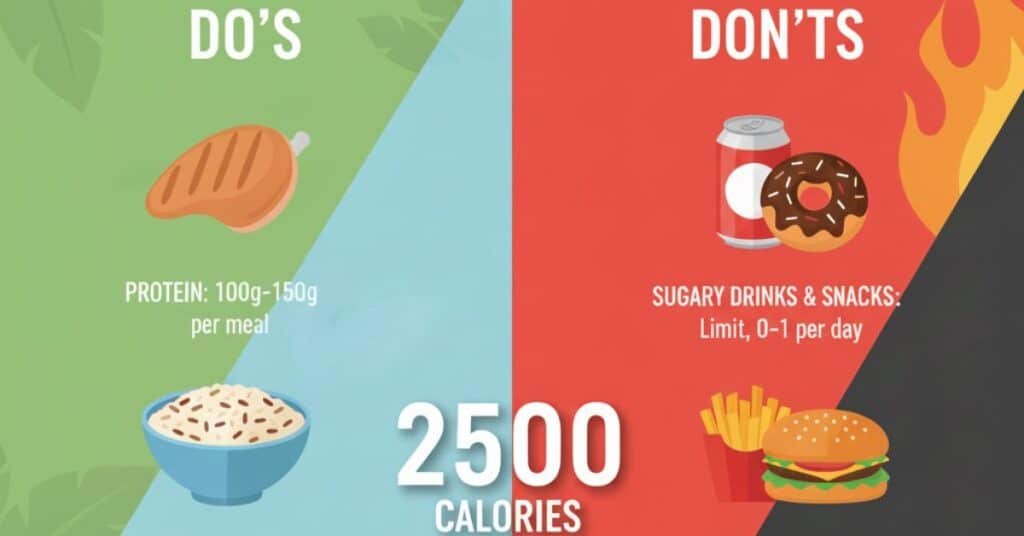
To successfully follow a 2500 calorie diet plan for muscle gain, keep these essential tips in mind:
Do’s
- Hydration: Drink plenty of water throughout the day.
- Consistency: Follow this pattern daily. Meal planning is crucial.
- The Right Ratio: Pay attention to the macronutrient ratio (Protein, Carbs, Fats). Do not focus solely on protein.
- Timing: Immediately include protein and carbs after your workout (post-workout meal).
Don’ts
- Skip Meals: Never skip a meal, as this will prevent you from reaching your high calorie diet goals.
- Late-Night Heavy Eating: Avoid heavy meals just before bedtime.
- Ignore Fibre: Make sure to include vegetables and whole grains in your diet.
Conclusion
A 2500-Calorie High-Protein Meal Plan is a strong foundation for achieving your fitness goals. By bringing quality food, excellent timing, and consistency into your diet, you can certainly achieve your goals.
FAQs;
Q1: Who is the 2500-Calorie Diet Plan for?
A: It is for individuals who want to build muscle mass (bulking) or engage in high-intensity physical activity.
Q2: Can I meet 2500 calories using junk food?
A: No. For healthy results, consuming nutrient-dense and high-protein foods is essential. Focus on quality calories.
Q3: How much protein should be in this plan?
A: In a high-protein plan, target about 30% to 35% protein of your total calories (i.e., approximately 180g to 220g).
Q4: Can this plan be used for weight loss?
A: Generally no, this plan is for a calorie surplus. For weight loss, you need a calorie deficit (fewer calories than you burn).
Q5: What should I do before starting the plan?
A: Always consult a certified Dietitian/Nutritionist so they can customize the plan according to your specific needs.
Meet Your Nutritionist: Hi, I’m Kiran! As a professional Nutritionist, I believe that food is your greatest tool for performance. I’ve designed this high-protein meal plan not just to help you hit your calorie targets, but to fuel your body with the right quality of nutrients. My mission is to simplify complex nutrition so you can focus on what matters your results!